AliExpress stands out as a global giant, offering everything from trendy gadgets to fashion finds at unbeatable prices.
With millions of users worldwide, it’s a go-to platform for bargain hunters.
However, beneath the allure of low costs and vast selections lies a critical aspect that can make or break the experience: the AliExpress return policy.
While AliExpress touts buyer protection and free returns as key features, real-world stories from shoppers reveal a more complicated picture.
This article dives into the official policy, uncovers its nuances, and spotlights the frustrations voiced by AliExpress users on Social, helping you decide if the platform’s deals are worth the potential hassle.
Understanding AliExpress’s Official Return Policy
At its core, AliExpress’s return policy is designed to provide buyers with safeguards against unsatisfactory purchases, emphasizing buyer protection through refunds or returns if items don’t meet expectations.
According to the platform’s guidelines, most items can be returned within 30 days of delivery, provided they remain unused, in original condition, and with all packaging and tags intact.
This window applies to a wide range of products, including clothing like sweaters, electronics, and household goods, but excludes categories such as digital products, customized items, perishable goods, underwear, and high-value items over $1,000.
One of the most promoted features is the “Free Return” service, which extends an additional 15 days beyond the standard delivery date for eligible items, allowing returns for any reason without incurring shipping costs.
To initiate a return, buyers must open a dispute via the AliExpress app or website within the protection period—typically 15 days after delivery for refunds or up to 90 days from the order date in some cases.
The process involves contacting the seller, providing evidence (like photos or videos) if the item is damaged or not as described, and selecting options such as full refund, partial refund, or return with refund.
For Free Return-eligible products, AliExpress promises a prepaid shipping label, making the process seamless: pack the item, print the label, and drop it off at a designated point.
Buyer protection covers scenarios where items don’t arrive, arrive damaged, or differ from the description, with refunds processed after verification.
In theory, this system prioritizes customer satisfaction, especially for dropshippers or frequent shoppers, and has expanded to include more items over time.
However, the policy isn’t without caveats. Returns to international sellers often based in China can involve shipping back to distant addresses, and not all items qualify for free returns.
Disputes must be filed promptly, and sellers have 24-48 hours to respond. If escalated, AliExpress’s team reviews evidence, but outcomes can vary based on the specifics.
Here are the key points of AliExpress’s current return and refund policy, based on official guidelines and the prominent Free Return program:
- Buyer Protection covers most orders: You are protected if items don’t arrive, arrive damaged, are not as described, or are of low quality.
- Dispute window : Open a dispute within 15 days after receiving the item (or after automatic confirmation of delivery) for most issues; some protections extend up to the on-time delivery date + 15 days.
- Free Return service (optional, seller-offered) — Clearly marked on eligible product pages; allows returns without reason (any reason) within 15 days of receiving the item.
- Conditions for Free Return: Items must be in perfect condition, unused, with original packaging, tags, and accessories intact.
- Process for Free Return: Open a dispute → Print free return label (prepaid/local) → Drop off at designated point → Get full refund after warehouse verification.
- Free shipping for return: Available for the first return per order in participating countries/regions (local warehouse drop-off, no shipping cost to buyer).
- Non-Free Return cases: For non-eligible items or issues like “not as described,” you may need to return at your own expense (often to China), or receive a partial/full refund without return (especially for low-value/damaged items).
- Domestic Returns (extra option): Some sellers offer local returns in your country (unused + original packaging); check the product page.
- Exclusions: No returns for personalized/custom items, perishable goods, intimate products (e.g., underwear), digital items, or certain high-value categories.
- Refund types: Full refund (common for major issues/no return needed), partial refund (keep item), or full refund after return; processed to original payment method after approval.
- Escalation — If seller and buyer can’t agree, escalate to AliExpress for final review (the platform usually favors evidence-based buyer claims).
The Dark Side: Common Complaints from AliExpress Shoppers on Social
While the official policy sounds reassuring, a deep dive into Reddit forums like r/Aliexpress paints a starkly different picture.
Shoppers frequently describe the return process as a “maze” of frustration, with accusations of misleading advertising, inconsistent enforcement, and outright scams dominating discussions.
These complaints, shared by users from around the world, highlight systemic issues that have reportedly worsened in recent years, particularly post-2025 policy tweaks.
Misleading “Free Returns” Promises
One of the most recurrent gripes is that the “Free Return” label is often a gimmick rather than a guarantee.
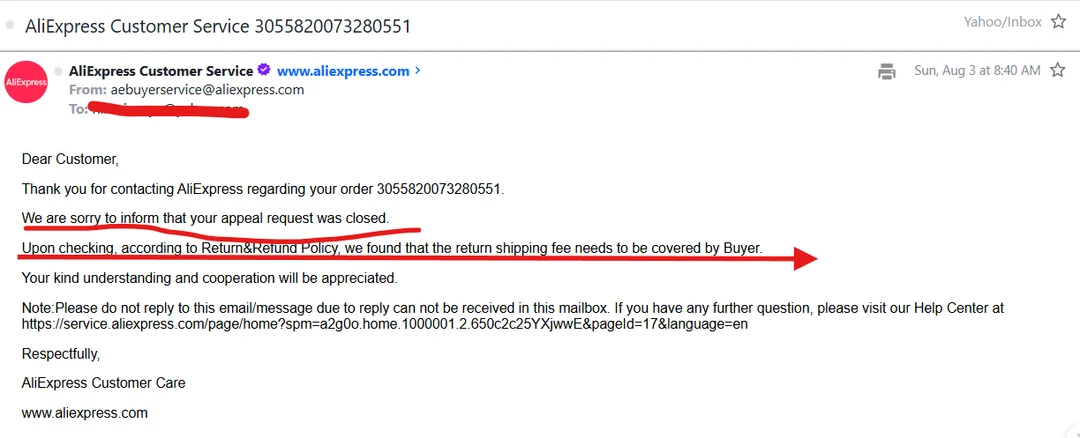
Users report being promised free shipping labels but instead being forced to self-ship items back to China at their own expense, with costs sometimes exceeding the product’s value.
For instance, a London-based shopper detailed spending £45 on postage for two items in one order, only to have AliExpress deny reimbursement despite explicit promises to cover it. They described endless loops with customer service chatbots that escalated issues but ultimately provided no resolution, labeling the entire system a “huge lie and scam” in 2026.
Similarly, another user encountered sellers uploading blank or invalid shipping labels, with AliExpress failing to verify them, leaving buyers stuck in a cycle of disputes.
Redditors advise avoiding returns altogether, even for defective items, as the “free” aspect rarely materializes, especially for international buyers facing high shipping fees.
Policy Changes and Increased Scrutiny
Many complaints point to recent changes in AliExpress’s refund policies, making it harder to secure full refunds.
Shoppers note that what was once a straightforward process similar to Amazon’s now requires exhaustive proof, including unpacking videos showing labels, even for non-electrical items.
One user lamented that small-item refunds, previously granted without hassle, are now routinely rejected, with demands for detailed evidence on every defect.
From late 2025 to up to mid Jan 2026, reports of blanket rejections surged, with users claiming AliExpress sides with sellers by default.
A buyer who returned a defective product under the 90-day policy was denied outright, despite the platform’s “not satisfied” clause allowing returns without justification.
Another shared that even with video evidence of broken items, refunds were refused, prompting threats of consumer arbitration.
Social users speculate these shifts prioritize sellers, eroding buyer trust and leading to warnings like “something’s off with AliExpress returns lately,” where disputes are rejected without explanation.
Partial Refunds and Janky Systems
Partial refunds instead of full ones are another sore point, often issued even when full returns are approved.
A user who followed the Free Return process for an unsatisfactory item ended up with only 50% back after a seller disputed the reason post-approval, calling the platform’s system “janky” with bugs like delayed labels.
Others report deductions for postage fees regardless of the “free” promise, or outright denials for items that “don’t match the description” upon return, despite being sent in original condition.
Customer service receives heavy criticism too, with polite interactions sometimes yielding better results, but many describe it as unhelpful or automated. Tips from the community include always selecting “item damaged” for priority, escalating via live chat, or avoiding disputes altogether by reselling items locally.
Final Thoughts: Shop Smart on AliExpress
AliExpress’s return policy offers a safety net on paper, with flexible timelines and free options that could appeal to savvy shoppers.
Yet, the chorus of complaints on Social Media platforms underscores a gap between promises and practice, where international logistics, policy shifts, and inconsistent support turn returns into a gamble.
Consider sticking to low-risk purchases, reading seller reviews meticulously, and factoring in potential return costs.
Ultimately, while the deals might tempt, weighing these real shopper experiences could save you from post-purchase regrets. For the best outcomes, document everything and perhaps explore local alternatives for peace of mind.