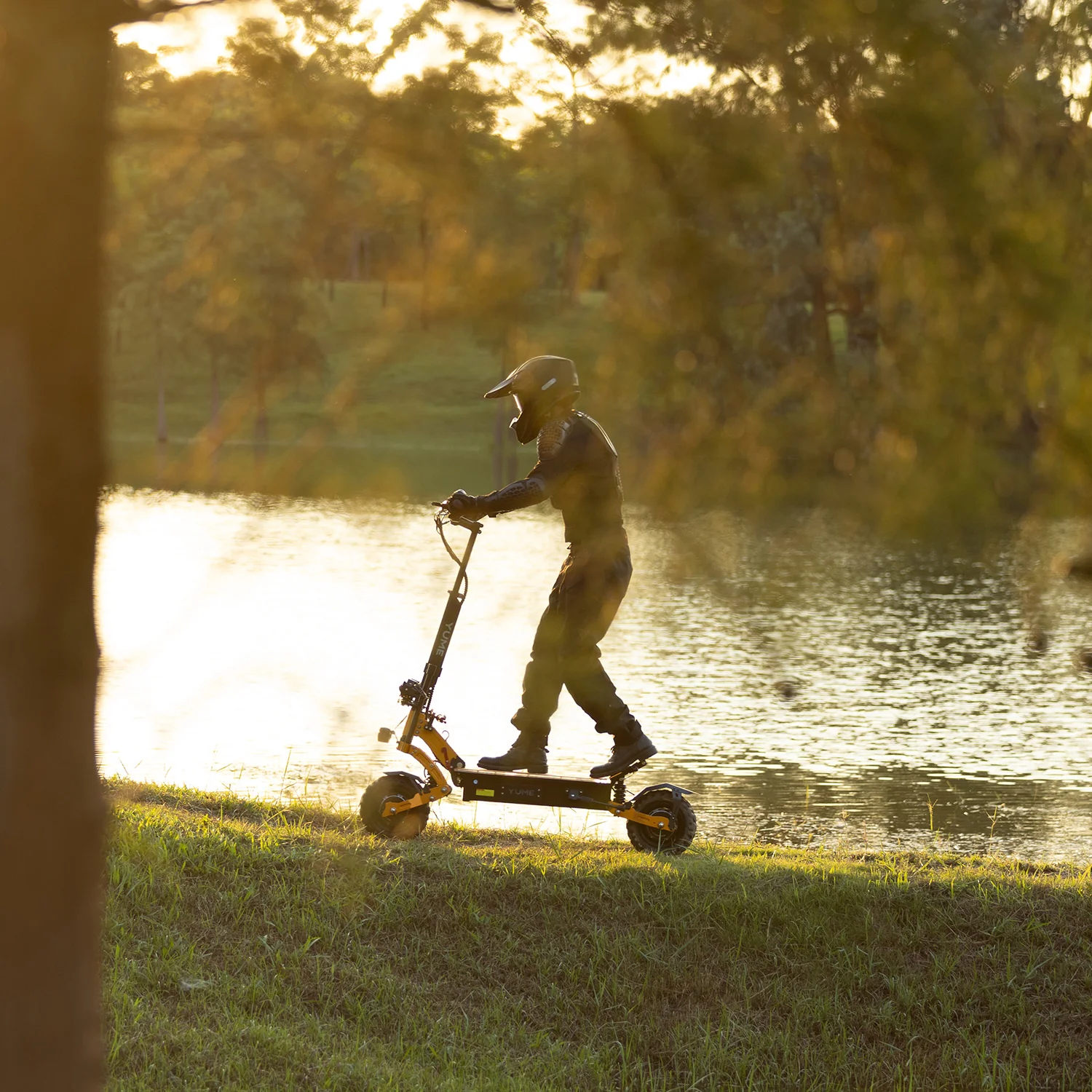
This guide covers everything you need to know to commute on an electric scooter safely, from the gear you wear before you leave the house to the habits that protect you on the road every single day.
Understand Your Scooter Before You Ride It
A lot of riders skip the learning curve and head straight into rush-hour traffic. That is a mistake.
Every electric scooter has its own personality. The throttle response, the braking distance, the turning radius, and the way the scooter handles bumps and wet surfaces all vary from model to model. You need to know your machine before you trust it in a high-pressure situation.
Find an empty parking lot or a quiet side street and practice the following until they feel automatic:
First, practice emergency stops. Squeeze both brakes at the same time and see how long it takes your scooter to come to a full stop from your typical commuting speed. That stopping distance is information you will use every single day.
Second, practice slow-speed control. Riding slowly in a straight line without wobbling takes more skill than riding fast. You will need this when you are navigating intersections or merging around pedestrians.
Third, practice tight turns. Know the minimum radius your scooter needs to turn without leaning the deck into the ground or losing balance.
You should also read your owner’s manual and understand the specific battery range under real-world conditions, not just the manufacturer’s stated range.
The advertised range is almost always measured under ideal conditions, meaning light rider, flat terrain, moderate speed, and mild weather. In practice your range will often be 20 to 40 percent lower depending on your weight, hills, wind, and how aggressively you accelerate.
Choose the Right Safety Gear and Actually Wear It
Gear is not optional if you are commuting in traffic. It is the only thing between your body and the road when something goes wrong, and something will go wrong eventually, even if you do everything right.
Helmet
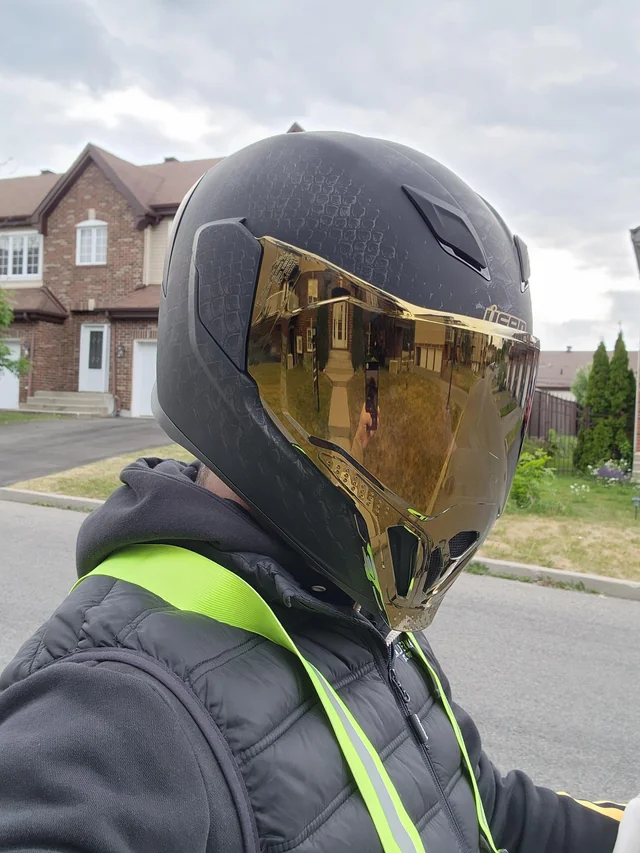
A helmet is the single most important piece of protective equipment you can wear. In most cities it is also required by law.
For electric scooter commuting, a full-face helmet or at bare minimum a half-shell helmet with a MIPS liner is strongly recommended. Bicycle helmets are designed for lower-impact falls at lower speeds.
If you are riding at 20 mph or above in mixed traffic, a motorcycle-style helmet offers meaningfully better protection for your jaw, chin, and the back of your head.
Make sure the helmet fits correctly. It should sit level on your head, cover your forehead, and not rock back and forth when you shake your head. A helmet that shifts around during a crash does not protect you the way a properly fitted one does.
We recommend the GX11 full-face electric scooter helmet.
Gloves
When you fall, your hands go out first. That is instinct. Riding gloves with reinforced palms protect against road rash and abrasions that can take weeks to heal. They also give you better grip on the handlebars, especially in rain or cold weather.
Knee and Elbow Pads
Knee and elbow pads are especially important for new riders and for anyone commuting on roads with rough pavement, potholes, or streetcar tracks. Lightweight skate-style pads are low-profile enough to wear under most pants and are far better than nothing.
High-Visibility Clothing
Drivers have a hard time seeing scooter riders even when they are paying full attention. Wearing bright or reflective clothing dramatically improves your visibility, especially at dawn, dusk, and at night. A reflective vest worn over your commute clothes takes seconds to put on and makes you far easier to spot.
Closed-Toe Shoes
Sandals and flip-flops have no business on a scooter in traffic. Wear shoes that cover your entire foot and have a sole with some grip. If your foot slips off the deck at speed, or if you need to put a foot down quickly, you want solid footwear under you.
Check Your Scooter Before Every Single Ride
A pre-ride check takes about two minutes and can prevent accidents caused by mechanical failure. Make it a habit the same way you would check a mirror before reversing a car.
Start with the tires. If your scooter has pneumatic (air-filled) tires, press on them and check that they feel firm.
Underinflated tires increase your braking distance, reduce stability, and make the scooter harder to control on uneven surfaces. Check the sidewalls for any cuts or bulges.
If your scooter has solid tires, look for chunks missing or uneven wear.
Check the brakes. Squeeze each brake lever and make sure it engages firmly without excessive play. If a lever pulls all the way to the handlebars before the brake engages, that is a problem you need to fix before riding. Test both the front and rear brakes because most electric scooters use a combination, and you need both working properly.
Check the lights. Turn on your headlight and taillight, and make sure both are working. Many scooter headlights are not bright enough for high-speed night riding, but any light is better than no light. If your brake light activates automatically when you squeeze the brakes, test that too.
Check the deck and folding mechanism. Make sure the deck is not cracked and that any folding joint is locked securely. A loose folding mechanism can collapse mid-ride, and that is as dangerous as it sounds.
Check the battery level. Never assume it is full. A scooter that runs out of battery in the middle of a fast road is a serious hazard because you suddenly have no motor braking and you will need to foot-brake or coast to a stop.
Know the Laws Where You Ride
Electric scooter laws vary enormously depending on where you live, and they have been changing fast as cities update their rules to keep pace with micromobility. Before you commute, look up the specific rules for your city or municipality. The things you need to know include:
The maximum legal speed for electric scooters in your area. In many cities this is between 15 and 25 mph (25 to 40 km/h), but some places restrict scooters to bike-lane speeds only.
Whether you are legally required to ride in a bike lane or whether you are allowed on the road. In some jurisdictions, you are not allowed on sidewalks at all. In others, sidewalk riding is permitted at reduced speeds.
The minimum age to ride and whether a driving licence is required. Some regions treat high-powered electric scooters as mopeds and require registration, insurance, and a licence.
Helmet laws. In many places helmets are legally required for riders under a certain age. In others, they are required for everyone. Either way you should wear one regardless of what the law says.
Ignoring these rules does not just expose you to fines. It can also affect you legally if you are involved in a collision, particularly around liability and insurance.
Learn How to Position Yourself in Traffic
Where you ride within the lane or on the road matters more than most new riders realize. Good positioning makes you more visible, gives you more options if something goes wrong, and communicates your intentions clearly to drivers around you.
Ride in the Bike Lane When One Is Available
If your road has a protected bike lane or a painted bike lane, use it. Stay toward the middle or left side of the lane (in countries that drive on the right) rather than hugging the curb.
Riding too close to the curb puts you at risk of catching a wheel on the edge of the pavement, hitting storm drains, or getting too close to parked car doors swinging open.
The Door Zone
Getting hit by a car door opening in front of you, called dooring, is one of the most common causes of cyclist and scooter rider injuries. Doors open fast and without warning.
When riding alongside parked cars, leave at least three to four feet of space between yourself and the row of parked vehicles. This means positioning yourself further into the lane than might feel comfortable, but it is far safer than riding close to the cars.
Riding in Mixed Traffic Without a Bike Lane
When there is no bike lane, you are riding in the road with cars. In this situation, do not hug the far right edge of the lane. That position makes you invisible to many drivers and gives you nowhere to go if a car comes too close.
Instead, ride approximately one meter from the curb or from the parking row, in a position where you are clearly visible to the driver behind you. This is called taking the lane, and while it might feel bold, it is actually the safer approach on many roads because it prevents drivers from trying to squeeze past you in a space that is not actually wide enough.
Intersections
More accidents happen at intersections than anywhere else. As you approach any intersection, slow down and make eye contact with drivers if possible.
Do not assume a driver can see you just because you can see them. Watch for vehicles turning right across your path (in right-hand traffic countries) or left across your path (in left-hand traffic countries) because this is the most common collision type for riders. Position yourself so you are in the driver’s field of vision, not in their blind spot.
Never run red lights. Not only is it illegal almost everywhere, it puts you in conflict with cross-traffic that has no reason to expect you there. The time you save is measured in seconds. The risk is not worth it.
Master the Art of Looking Ahead
Defensive riding is all about processing information early enough to act on it calmly rather than reactively.
Riders who only look at the road immediately in front of their wheel are always behind the situation. Riders who scan 10 to 15 seconds ahead can see hazards developing and adjust smoothly.
Practice scanning the full scene as you ride. Look at intersections ahead, watch for brake lights going on in front of parked cars (a sign that someone is about to pull out), notice pedestrians near the curb who might step into the road, and watch for road surface changes like potholes, wet leaves, grates, and painted road markings that become slippery when wet.
Painted road surfaces, including crosswalk markings, bike lane boundary lines, and road paint in general, become significantly more slippery than bare pavement when wet. Hit them straight on and do not try to brake or turn sharply while crossing them in the rain.
Manage Your Speed Realistically
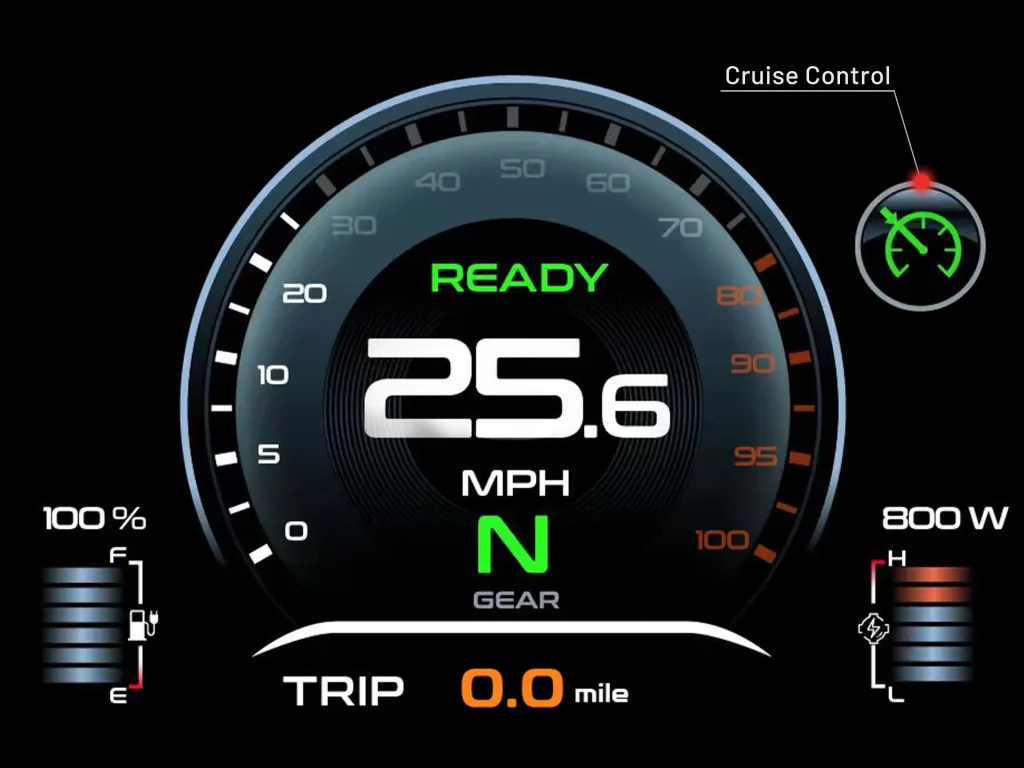
Speed is the single biggest factor in how severe an accident is if one happens. At 10 mph, a fall from a scooter is usually survivable with minor injuries if you are wearing gear.
At 25 mph, the same fall can be life-altering. This does not mean you need to crawl everywhere, but your speed should match the environment you are in.
Slow down significantly in the following situations: pedestrian-heavy areas, wet or slippery roads, poor visibility, road surfaces you do not know well, when approaching intersections, when overtaking other riders or pedestrians, and in tight spaces with limited room to maneuver.
Also be aware of how speed interacts with your scooter’s braking capability. Most entry-level and mid-range scooters can stop from 15 mph in roughly 10 to 15 feet under ideal dry conditions.
At 25 mph, that distance increases substantially, and wet brakes will increase it further. Build in the stopping distance you actually need, not the stopping distance you hope you need.
Ride Predictably and Communicate Your Intentions
One of the reasons cyclists and scooter riders get hit is that drivers cannot predict what they are going to do next. Riding in a straight line, signaling before turns, and avoiding sudden weaving all make you far easier for drivers to accommodate.
Hand signals are important. Some electric scooters do not have turn signals. Point in the direction you intend to turn well in advance, hold the signal long enough for drivers behind you to register it, and only release it when you are already committed to the turn.
Make sure the hand signal does not compromise your balance on the scooter. If you feel unstable signaling with one hand while moving, practice this at lower speeds until it feels natural.
Move in consistent, gradual lines rather than darting between spaces. If you need to change position in the lane, do it smoothly and early, not at the last second. Predictability is a form of safety.
Riding at Night
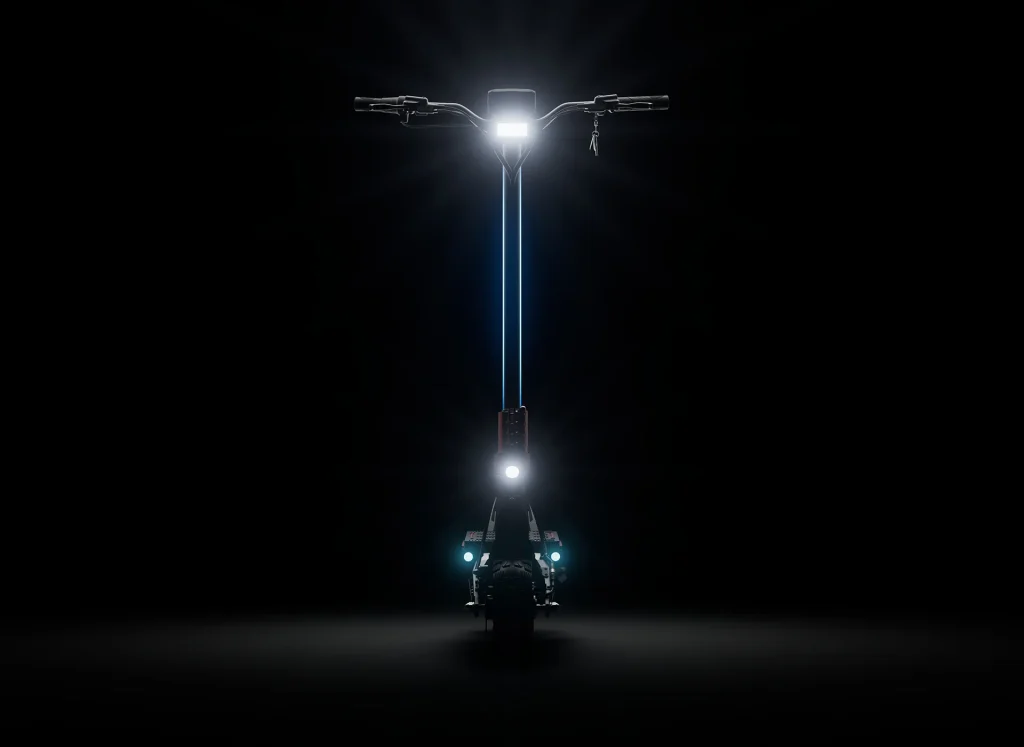
Night riding introduces risks that simply do not exist during the day. Visibility drops dramatically, road surface problems are harder to see, and drivers are often less alert. If your commute involves riding in the dark, these are the things you need to address.
Your scooter’s built-in headlight is often inadequate for the speeds you are traveling. Many stock scooter headlights throw a beam of 30 to 50 lumens, which is enough to make you visible to others but not bright enough to illuminate the road ahead at 20 mph.
Add a supplemental handlebar-mounted light of at least 400 to 600 lumens if you are riding in areas without good street lighting. We recommend this rechargeable light for maximum brightness.
Make yourself visible from behind. Your rear light and any reflective elements on your scooter are what drivers see when they approach from behind. A flashing red rear light is more attention-grabbing than a steady one. Add reflective tape to the rear of your scooter and to your helmet if you ride at night regularly.
Wear reflective clothing or a high-visibility vest. Being seen from the side and from in front matters too, not just from behind.
Reduce your speed at night. Your reaction time does not change after dark, but your ability to see hazards early does. Compensate by slowing down, especially on roads you do not know well.
Handling Bad Weather
Riding in rain is not ideal, but if you commute daily you will almost certainly encounter it. Understanding how wet conditions change your scooter’s behavior is essential.
Braking distances increase significantly on wet roads, particularly if your scooter uses drum brakes or budget disc brakes.
Begin braking earlier than you think you need to and apply pressure gradually rather than squeezing the brakes hard. Hard braking on a wet surface can cause the wheel to lock up and the scooter to slide.
Many electric scooters have an IP rating that indicates their water resistance. An IP54 rating means the scooter can handle light splashing from any direction.
An IP65 rating means it can handle sustained water jets. An IP66 electric scooter or higher means it can withstand brief submersion.
Check your scooter’s IP rating before riding in the rain. Riding a scooter with no IP rating or a low rating through heavy rain or deep puddles risks damage to the motor, battery, and electronics. Even riding through puddles that look shallow can be a problem because you cannot see what is underneath the water.
Avoid riding in heavy rain, thunderstorms, or on flooded roads whenever possible. If you do get caught in rain, dry your scooter thoroughly before charging it and check that the charging port is dry before connecting the cable.
Strong crosswinds can affect stability, especially at higher speeds. Ride at lower speed and keep both hands on the handlebars in windy conditions.
Dealing with Road Hazards
The road surfaces that cars and even bicycles handle without issue can be genuinely dangerous on a scooter, particularly if your scooter has small wheels.
Most commuter scooters run on 8 to 12-inch wheels. Smaller wheels have less ability to roll over obstacles and are more likely to be deflected by a hazard or to drop into a gap.
Potholes are a major risk. A pothole that a car rolls over without noticing can send a scooter rider flying over the handlebars. Scan ahead and steer around them when possible.
When you cannot avoid a pothole, shift your weight back slightly and let your knees bend to absorb the impact rather than staying rigid.
Train tracks and tram lines are particularly hazardous because the wheel of a scooter can drop into the groove and lock.
Always cross rail tracks at a 90-degree angle so your wheel rolls directly over the track rather than along it. If you cross at a shallow angle, your wheel can follow the groove and throw you off immediately.
Gravel, sand, and wet leaves on pavement all reduce traction dramatically and can cause a wheel to slide unexpectedly. Treat any of these surfaces the way you would treat ice: reduce speed, avoid sharp turns, and do not brake hard.
Speed bumps should be crossed slowly and straight on. Hitting a speed bump at an angle or at speed can unsettle the scooter or cause the deck to scrape the pavement.
Be Mindful of Pedestrians
Pedestrians are the most vulnerable people in any shared space, and on a scooter you are much faster and harder to hear than they expect. Treat every pedestrian the way you would want drivers to treat you: with enough space, enough warning, and enough patience.
Do not ride on sidewalks in areas where foot traffic is present, both for legal reasons and because a collision with a pedestrian at scooter speed can seriously injure them. If you must use a footpath in a low-traffic area, ride at a walking pace and be prepared to stop immediately.
Use your horn or bell when approaching pedestrians from behind, especially on shared paths. Most people cannot hear an electric scooter approaching. Give them a short, polite signal well before you reach them so they have time to respond without panic.
At crosswalks, always yield to pedestrians even if you technically have right of way. The few seconds you save are not worth the risk to them or to you.
Build Good Habits Around Charging
Battery management is a safety issue, not just a convenience issue. Running out of battery mid-commute leaves you on a road with a heavy, unpowered scooter that has no electronic braking assistance and that you have to kick, push, or carry.
Charge your scooter after every ride rather than waiting until the battery is nearly empty. Lithium batteries generally last longer and perform better when they are kept between 20 and 80 percent charge rather than repeatedly run down to near zero.
Do not leave your scooter on the charger overnight for extended periods if your charger does not have an automatic cutoff, as overcharging can accelerate battery degradation over time.
Before a longer-than-usual commute, check the battery level explicitly and plan a route that keeps you within your real-world range, not the manufacturer’s claimed range. Leave a buffer. Running out of battery with two kilometers still to go is not a disaster, but it is avoidable with a little planning.
Charge in a well-ventilated area away from flammable materials. Lithium battery fires are rare but serious when they do occur. If you notice your battery swelling, getting abnormally hot during charging, or emitting an unusual smell, stop using it and contact the manufacturer.
Lock Your Scooter Properly When Parked
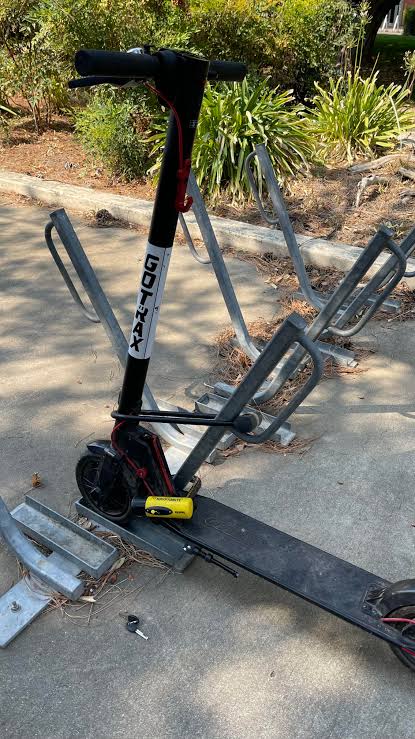
A locked scooter that gets stolen is an inconvenience. An unlocked scooter that gets tampered with and then ridden by you later is a safety hazard. If someone interferes with your brakes, cables, or folding mechanism while your scooter is parked, you will not necessarily know until those components fail when you need them.
Use a U-lock or a heavy chain through the frame of the scooter and around a fixed object. Do not rely solely on the scooter’s built-in wheel lock if it has one. A wheel lock prevents rolling but does not prevent the whole scooter from being carried away or messed with.
Always do your pre-ride safety check after your scooter has been parked in a public place, regardless of whether you think anything happened. It takes two minutes, and it is worth it.
Stay Sober and Alert
Riding an electric scooter while impaired by substances is illegal in most places and genuinely dangerous. Your reaction time, your depth perception, your balance, and your judgment are all degraded by drugs, and on a scooter in traffic, those impairments can be fatal.
Fatigue has a similar effect. A commute at the end of a long, exhausting day requires the same alertness as the morning commute. If you are too tired to concentrate properly, consider an alternative for that trip. Public transit or a ride service is always an option when you are not in the right state to ride safely.
Distracted riding is just as dangerous as distracted driving. Do not look at your phone while riding. Do not wear earphones that block out all external sound.
You need to hear traffic around you, including horns, braking sounds, and the approach of vehicles from behind. If you listen to music or podcasts while riding, use only one earbud at a low volume so you can still hear the environment.
Also Read: The truth about removing the speed limiter on your electric scooter
Know What to Do If You Are Involved in an Incident
Even with good habits and proper gear, incidents happen. Knowing what to do in the immediate aftermath can protect both your health and your legal position.
If you are involved in a collision with a vehicle, stop and stay at the scene. Check yourself for injuries before moving significantly, because adrenaline can mask pain, and you may not immediately notice that you are hurt. Call emergency services if you or anyone else is injured.
Exchange information with any other parties involved: name, contact details, vehicle registration, and insurance information where applicable. Do not discuss fault at the scene. Just gather information.
Document everything you can. Take photos of the scene, the positions of the vehicles and scooter, any damage, and any road conditions that may have contributed to the incident. If there are witnesses, ask for their contact details.
Report the incident to the relevant authority if required by the laws in your area. In some jurisdictions any road collision involving injury must be reported to police.
Seek medical attention even if you feel fine. Some injuries, particularly head injuries and internal injuries, may not present symptoms immediately. If you hit your head, see a doctor regardless of whether you were wearing a helmet.
Keep Your Scooter Maintained Over Time
A brand new scooter in perfect condition is very different from a scooter that has been ridden daily for a year with no maintenance. Components wear, bolts loosen, brake pads thin out, and tires degrade. Staying on top of maintenance is part of riding safely.
Check and tighten all bolts and fasteners periodically, especially the ones connecting the stem to the deck and the folding mechanism. Vibration from daily riding causes bolts to work themselves loose over time.
Brake pads wear down with use and need to be replaced. If you notice your braking becoming less effective or hear grinding sounds when you brake, inspect the pads immediately. Riding with worn brake pads in traffic is one of the more avoidable risks there is.
If you have pneumatic tires, inspect them regularly for wear and embedded debris. A slow puncture that develops during a commute can cause handling instability before it becomes an obvious flat. Carry a portable tire inflator or a patch kit if your commute is long.
If your scooter develops any unusual sounds, vibrations, or behaviors, investigate before the next ride rather than hoping it resolves itself. A rattle that turns out to be a loose stem bolt, caught early, is a two-minute fix. Caught on the road at speed, it is a crash.
Final Thoughts
Commuting on an electric scooter is genuinely one of the better ways to get around a city. It is cost-effective, efficient, and far more enjoyable than sitting in traffic. But the margin for error is smaller than in a car.
You have no crumple zones, no airbags, and no steel cage around you. What you do have is the ability to be well-prepared, well-equipped, and genuinely attentive every time you ride.
The riders who stay safe over thousands of miles of city commuting are not the ones who never encounter danger. They are the ones who have built the habits, the gear, and the situational awareness to respond to danger well before it becomes a crisis.
Every tip in this guide is part of building that foundation. Take it seriously from your first ride, and it becomes second nature quickly.