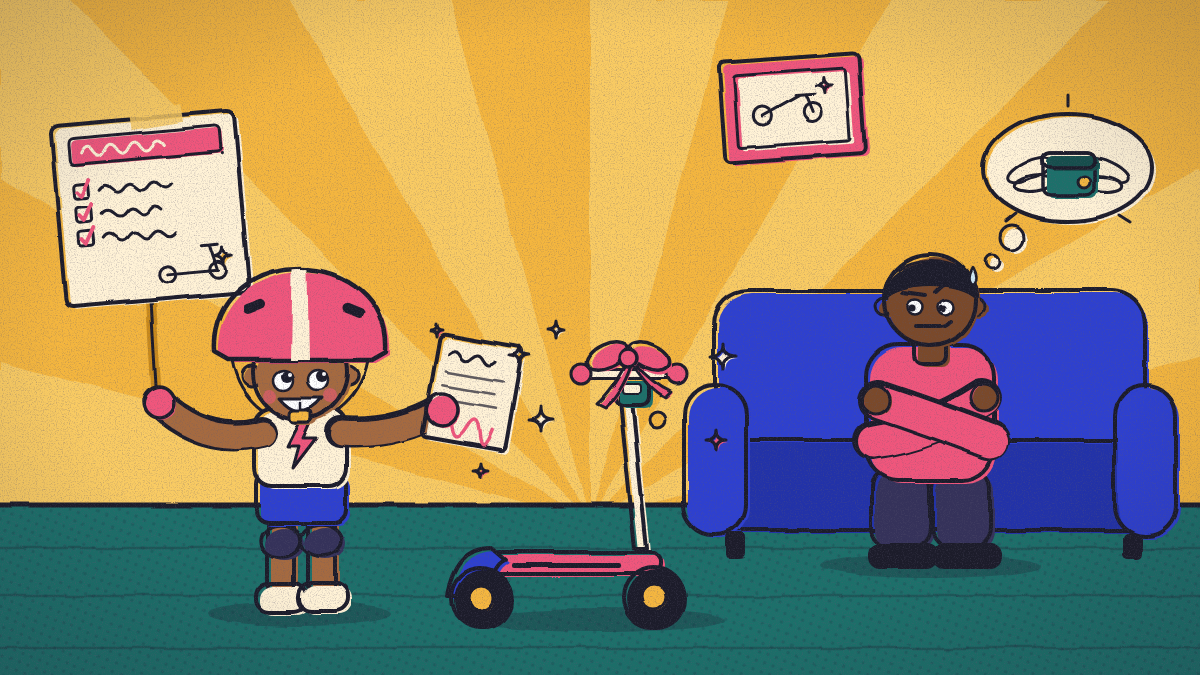
Exhibit A is a seven-slide presentation titled “Why I Am Ready.” Exhibit B is a handwritten contract, signed in glitter pen, promising to wear a helmet “forever.” Exhibit C is the child herself, standing in the kitchen doorway at 6:45 p.m., holding a glass of water for her father like a tiny, very strategic waiter.
Welcome to the courtroom otherwise known as the family living room, where the case for an electric scooter is being argued by the most motivated lawyer alive: a kid who has already picked the color.
This is not a small corner of the internet. TikTok is stuffed with creators posting “show this to your parents” videos about e-scooters, and one parent went viral for sharing a teen daughter’s full PowerPoint presentation on why she needed an e-bike. Some kids even film themselves asking mom for a scooter on Day 1, then Day 2, then Day 3, like a reality show where the prize is a deck with a motor.
So let’s open the case file. Here is how kids actually sweet-talk their way to an electric scooter, why some of it works, and what parents can say back without losing their dignity (or their wallet).
Why Kids Are So Good at This
Marketers have a name for it: pester power. Researchers who study it found that both plain nagging and manipulative nagging increase as children get older. Translation: your ten-year-old whines, but your fourteen-year-old builds a case with citations.
The modern scooter campaign is nagging with a business degree. It has a pitch, a safety plan, a budget angle, and a fallback position. Let’s break down the playbook.
The Sweet-Talk Playbook
1. The Rules Pledge (“I Will Follow Every Single Rule”)
This is the opening move, and the best kids lead with it, because the number one parent fear is “you’ll ride like a maniac.”
The pitch: “I’ll wear my helmet every ride, stay in the speed mode you choose, never ride at night, and never carry a friend on the back.”
Why it works: It answers the objection before the parent says it out loud. Parents love being one step ahead, even when the kid is two steps ahead of them.
The parent comeback: “Great. Write the rules down, sign it, and we’ll agree what happens when one gets broken.” A pledge with no consequence is just a wish with handwriting.
2. The Helmet in the Cart
Smart kids don’t ask for a scooter. They ask for a scooter and a helmet, gloves, and knee pads, as a package.
The pitch: “I already picked out a certified helmet. It’s in the cart next to the scooter.”
Why it works: It reframes the purchase from “toy” to “responsible equipment.” It’s also genuinely good practice. Helmets are typically required for riders under 18 and recommended for everyone, so a kid who volunteers one is already ahead of the average rider.
The parent comeback: “The helmet gets bought first and worn around the house for a week. If you’ll wear it to take out the trash, I believe you.”
3. The Advantages Brochure
Here the child becomes a travel agent for Planet Scooter. Favorite selling points include:
- Independence: “I can get to school, tuition, or my friend’s place without you being my taxi.” Parents hear free evenings.
- Fun that isn’t a screen: One popular TikTok plea promises the scooter will stop the creator from bedrotting. Honestly, it’s a decent argument. A kid outside beats a kid horizontal.
- Cheaper than a lift: Compared with constant rides, a scooter’s running cost is basically a charger and some electricity.
- Eco points: No tailpipe, no fuel, a smaller footprint on short trips.
- Portability: Most fold up, so they fit in a hallway, a bus, or the boot of a car.
The parent comeback: “Which of these are about getting around and which are about fun? Both are fine, but let’s be honest about which one is driving the request.”
4. The Presentation (Slides Optional, Charisma Mandatory)
The PowerPoint is now a legitimate art form. A great one has a problem slide (“I’m late to everything”), a solution slide (the scooter), a risk slide (safety plan), and a cost slide (who pays what).
Why it works: Effort is persuasive. A parent who watches a kid spend a weekend building slides starts thinking, “If they’ll put this much work into a pitch, maybe they’ll put that much work into responsibility.”
The parent comeback: “Impressive. Slide eight is missing: what happens if you break the agreement? Add it.”
5. The Co-Investment Offer
This is the heavyweight move. Instead of “buy me one,” the kid says, “I’ll cover part of it.”
The pitch: “I’ve saved this much from birthdays and pocket money. If you cover the rest, it’s a team purchase.”
Why it works: Skin in the game changes the whole mood. Parents shift from “should I fund this?” to “should I match this?” It also makes the kid care for the scooter more, which is a quiet safety win.
The parent comeback: “Love it. Money saved by you, matched by us, once the trial period goes well.”
6. The Trial Period Compromise
When the answer is “not yet,” an experienced kid doesn’t argue. They negotiate.
The pitch: “Let me borrow a friend’s scooter or rent one for a weekend, with you watching. If I ride well, we revisit.”
Why it works: It turns a yes or no into a test, and children are brilliant at tests when the reward is wheels.
The parent comeback: “Perfect, and you ride in a car park first, not a road.”
7. The Timing Strategy
Never underestimate a birthday, a report card, or Christmas. Videos aimed at kids literally tie the ask to the holiday season, with creators telling kids to send the video to their parents and get that e-scooter around Christmas. Good grades, finished chores, and a suspiciously clean bedroom often appear three weeks before the big ask.
The parent comeback: “I see the clean room. I appreciate it. It doesn’t change the safety conversation.”
8. The Campaign Approach
Day 1: polite question. Day 2: polite question with a smile. Day 3: casually leaves scooter reviews open on the family tablet. This is classic pester power with better manners.
The parent comeback: “I heard you the first time. I’m deciding on facts, not on how many days in a row you ask.”
The Reality Check Every Pitch Needs
Here is where a great sweet-talker and a great parent finally meet in the middle: the numbers.
Children aged 14 and under made up about 36% of micromobility injuries from 2017 to 2022, double their 18% share of the U.S. population. Kids are not just riding, they are getting hurt more than their numbers suggest.
The most recent CPSC report counts 207 e-scooter deaths among 533 micromobility fatalities, and 140 of the 206 e-scooter deaths it analyzed involved motor vehicles. In plain words, the biggest danger is not the scooter. It’s the car next to the scooter.
The CPSC also warns that many e-scooters are built for adults because of their size and speed, and children are less likely to anticipate hazards. And the battery matters too: many lithium-ion battery fires and deaths happen at night while batteries charge and families sleep.
So a pitch with real weight includes these:
- The right scooter for the right age. Manufacturers often recommend a minimum age of around 8, and many places set rider age limits between 12 and 16.
- A speed cap. Cities commonly enforce maximum speeds between 20 and 25 km/h, which is a good number for a young rider’s starting mode.
- A charging rule. Charge only while someone is awake and nearby, with the charger that came with the scooter.
- A local law check. Rules differ by country and city. Look up your own area’s age, helmet, and road rules before the money moves.
The Pledge Template (Steal This, Kids)
If you’re a child reading this and plotting your next move, print this and bring it to the table:
- I will wear a helmet on every ride, even a short one.
- I will stay in the speed mode we agreed on.
- I will ride only in places we’ve approved, never on busy roads.
- I will not ride at night or in the rain.
- I will never carry a passenger.
- I will charge the battery only when an adult is home and awake.
- If I break a rule, the scooter goes on pause for one week, no debate.
Sign it. Date it. Let the glitter pen do the rest.
A Note to Parents: Spotting a Pitch From a Plan
A sweet-talk has charm. A plan has details. Here’s a quick test:
- Can they name the exact scooter and its top speed?
- Do they know the local rules?
- Is there a safety kit in the proposal, or just a scooter?
- Did they offer a consequence for breaking the deal?
If the answer is yes to all four, you aren’t being played. You’re being hired.
Frequently Asked Questions
What age is right for a child’s first electric scooter?
It depends on the model and your local law. Many manufacturers suggest a minimum of around 8, while many regions set road-riding limits between 12 and 16. Always check the manual and your local rules.
Is a helmet really necessary on short rides?
Yes. Helmets are usually required for riders under 18 and recommended for everyone. Short rides still end in falls.
What’s the safest way to introduce a first scooter?
Start in an empty, flat, traffic-free space in the lowest speed mode, with a helmet, with you watching.
How should a child respond if the answer is no?
Ask what would change the answer, then do those things. A calm “what would make this a yes?” beats three days of begging.
How should parents handle a fed-up “everyone else has one”?
Acknowledge it, then bring the conversation back to safety, age, and your family’s rules.
The Verdict
The kids pitching scooters aren’t villains. They’re future negotiators, entrepreneurs, and probably lawyers, practicing on the toughest client they will ever meet: a parent holding a wallet. The best outcome isn’t a win for either side.
It’s a signed pledge, a helmet that fits, a scooter that suits the rider’s age, and a child who learned that the most persuasive argument is a responsible one. And if you’re the parent, keep the slide deck. In ten years, it makes a fantastic wedding video.