Whether you bought something that did not fit, received the wrong item, or simply changed your mind, Amazon has built one of the most shopper-friendly return systems in e-commerce.
This guide covers everything you need to know about Amazon returns, from the standard 30-day policy and how to find drop-off locations near you, to what happens to returned items after they leave your hands.
Amazon Return Policy: The Basics
Most items can be returned for a refund or replacement within 30 days of delivery, as long as they are in original or unused condition. This is the foundation of the Amazon return policy, and it applies whether you shop on desktop, mobile, or through the app. Amazon
The clock starts from the date of physical delivery, not the date you placed the order. You can always verify your exact return deadline on your order details page.
Holiday Return Extension
Amazon’s extended holiday returns policy allows most items purchased between November 1 and December 31 to be returned through January 31. Sometimes, Apple-branded products purchased during this window have an earlier deadline of January 15.
This extended window was introduced because many people will not open their gifts until Christmas Day or after, so Amazon adjusts its policy to allow for greater flexibility.
Returnless Refunds
A returnless refund is when Amazon issues a full refund without requiring you to send the item back. Amazon applies this at its discretion, typically for low-cost items where return shipping costs are not economical. You cannot request it; Amazon decides.
Return Windows by Category
Not every product follows the standard 30-day rule. Some categories have shorter windows, and others are considerably more generous.
Baby Registry items enjoy a 365-day return window from delivery, provided they are in new, unopened condition. Electronics, including high-end items such as laptops and cameras, must generally go back within 15 days.
Certain categories such as electronics, baby items, and mattresses have different return windows from the standard 30 days. Holiday purchases typically have extended deadlines through January 31.
Here is a quick reference for common category windows:
- Most physical products: 30 days from delivery
- Electronics (non-holiday): 15 days from delivery
- Baby registry items: 365 days
- Holiday purchases (November 1 to December 31): Until January 31 of the following year
- Apple-branded products purchased in the holiday window: Until January 15 of the following year
Always check the individual product detail page before buying to confirm the exact return window, as category rules can shift depending on the seller.
Items That Cannot Be Returned
Some products are non-returnable under any circumstances. Knowing this before you buy can save you a frustrating experience later.
Certain product categories are non-returnable on Amazon regardless of condition or purchase date.
These include perishables, hazardous materials, digital products, gift cards, customized items, Amazon Pharmacy products, pet medications, and automobiles. Items marked “Final Sale,” including trading card games and Amazon Haul store items priced at $3 or less, also cannot be returned.
Generally, digital products such as Kindle books, digital music, and Prime Video purchases are non-returnable. However, Amazon does offer a limited accidental purchase refund for Kindle books within seven days of purchase if you have not read more than 10% of the content.
Items purchased from Amazon Pharmacy are not returnable or refundable. For more assistance with an Amazon Pharmacy item, the Amazon Pharmacy Help Page handles those situations directly.
If a non-returnable item arrives damaged or significantly different from its description, you may still be eligible for a refund. Contact Amazon customer service directly in those cases.
How to Check Your Amazon Orders and Returns
Before you can start a return, you need to locate the order. Amazon makes this easy through the “Your Orders” section, which is the central hub for all order and return activity.
On Desktop
- Sign in to your Amazon account at amazon.com
- Hover over “Returns and Orders” in the top right corner
- Click “Your Orders” from the dropdown
- Use the search bar or filters to find the specific purchase
On the Amazon App
- Open the Amazon app on your phone
- Tap the three-line menu icon (bottom right on iOS, top left on Android)
- Tap “Your Orders”
- Scroll or search for the item you want to manage
From “Your Orders,” you can track deliveries, view past purchases, initiate returns, and check the status of any refund already in progress. The order detail page also shows the specific return eligibility and deadline for each item.
How to Return Amazon Items Step by Step
The process is fairly painless, which is part of why Amazon’s return rate compares well against the industry average. Fewer friction points means more people actually complete returns instead of giving up halfway.
Follow these steps to start a return:
- Log in to your Amazon account and go to “Your Orders”
- Find the item you want to return and select “Return or Replace Items”
- Choose a reason for the return from the dropdown menu
- Select your preferred refund method (account balance, original payment method, or replacement)
- Choose a return drop-off method from the available options
- Receive your QR code or prepaid return label
- Drop the item off at your chosen location
If you have bought an item such as a computer or electronic device on which you saved personal information, erase that information completely by following the manufacturer’s instructions before returning it.
Replacement vs. Refund
When you initiate a return, Amazon gives you the option to either receive a refund or request a replacement.
A replacement sends you the same item again, which is useful when the product arrived damaged or defective but you still want it. A refund puts the money back through your original payment method or adds it to your Amazon gift card balance, depending on your preference.
Amazon Return Process: What Happens to Your Refund
The speed of your refund depends on the method you choose and how quickly the item is received and processed.
If you just want an Amazon gift card balance credit, the process takes only two to three hours. Credit card refunds take between three and five business days, and debit card refunds could take up to ten days.
For UK customers, Amazon will issue a refund within a maximum of 14 days and confirm it with an automated email. You can see the refund in your bank account or credit card statement within a maximum of seven business days after the refund is issued.
Instant Refunds
Amazon has been rolling out instant refund processing at some drop-off locations. You drop the item off, the location scans it, and your refund processes on the spot. Kohl’s and some Whole Foods locations support this option.
If You Miss the Return Window
If you miss Amazon’s standard 30-day return window, the return option may no longer appear in your account.
However, you can still contact Amazon Customer Service directly to request a return or refund, particularly if the item is defective, damaged, or not as described.
Amazon Return Store Near Me: Drop-Off Locations
One of the biggest improvements Amazon has made in recent years is the expansion of its physical return network. You no longer need to find a box, print a label, or schedule a pickup in most cases.
Four out of five Amazon customers in the US have access to at least one of Amazon’s 10,000-plus drop-off locations available within five miles of their home, now including FedEx Office locations nationwide.
How to Find a Drop-Off Location Near You
When you initiate a return through your Amazon account, the system automatically shows you which drop-off options are available based on your delivery address. Choose the one that fits best into your routine.
Kohl’s
Kohl’s stores make it simple to drop off eligible returns during a regular shopping trip. Present your QR code, and Kohl’s will handle boxing and shipping. No box or label is needed on your end.
Whole Foods Market
Go to your Amazon account to start the return, choose Whole Foods Dropoff, then bring the item to your nearest Whole Foods Market store and visit the Customer Service desk or Amazon Counter.
No box or label is needed. Show the QR code from the Amazon app or your return confirmation email to the team member.
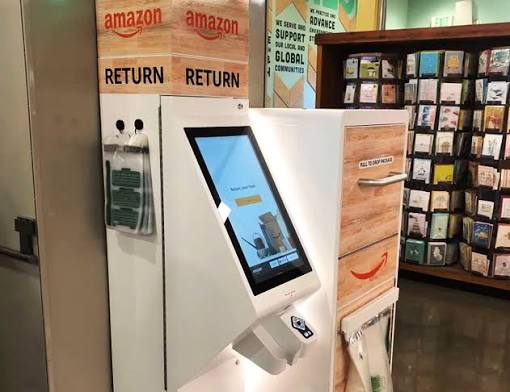
Amazon is introducing return kiosks to around 350 Whole Foods locations, with the goal of having customers complete their returns in 60 seconds or less.
The UPS Store
UPS Stores or even Happy Returns, if you may, accept Amazon returns, and UPS will pack, label, and ship your return free of charge. You can also hand a UPS-labeled return package directly to a UPS delivery driver if you prefer not to make an extra trip.
A UPS drop-off fee of $1 was introduced for situations where a free option exists closer to your delivery address. To avoid this, always check whether Kohl’s, Whole Foods, or another free option is available first.
Staples
Staples accepts unpackaged, free returns at their service desks. Show your return QR code to a store associate and Staples will pack, label, and ship your return.
FedEx Office
Over 2,000 FedEx Office locations have been added to Amazon’s growing network of return drop points that do not require a box or shipping label. This makes FedEx Office one of the largest single partners in the return network.
Other Locations
Regional partners like Winn-Dixie, Save Mart, and Goodwill also participate in select states. The full list of available options will appear when you start your return based on your ZIP code.
Pro Tip on Speed
Pick your drop-off location based on speed, not necessarily driving distance. The closest location is not always going to save you time. Whole Foods Market and Kohl’s tend to scan and confirm items almost immediately, while UPS Stores can sometimes take up to 24 hours depending on staff and backlog.
Amazon Returns UK
Amazon UK shoppers follow largely the same principles as US customers, with some differences driven by UK consumer law.
Amazon.co.uk and many sellers on Amazon.co.uk offer returns for most items within 30 days of receipt of delivery.
Statutory Cancellation Rights
UK buyers benefit from additional legal protections under consumer law. UK buyers retain 14-day statutory rights regardless of Amazon policy.
This means even if a seller’s individual policy is less generous, UK customers have a baseline legal right to cancel an order and return goods within 14 days of receiving them.
Refunds on Amazon UK
Refund after return: after returning your item, it may take up to 14 days for Amazon to receive and process it. An instant refund option to your Amazon.co.uk gift card balance or credit card may sometimes be offered. In this case, you still need to return your items within 30 days.
If the product is not received in the same condition in which you received it, Amazon may be entitled to reject the return or reduce the refund. This does not apply if you are returning an item that is incorrect, damaged, defective, or does not match the product description.
How to Return Items on Amazon UK
You can return many eligible items sold on Amazon.co.uk via the Online Returns Centre. When you return an item, you may find different return options depending on the seller, item, or reason for return. Remember to remove all personal data from electronic items such as laptops and cameras before sending them back.
Amazon Haul UK
Amazon Haul has a separate returns policy on Amazon.co.uk, and products from that storefront are not eligible for the standard 30-day voluntary returns policy.
Third-Party Sellers and the Amazon Return Process
A significant portion of products on Amazon are sold by independent third-party sellers rather than Amazon directly. It is worth understanding how returns work in those situations.
Items fulfilled by Amazon (FBA) follow Amazon’s standard return policy even when sold by a third-party seller.
Items fulfilled directly by the seller (FBM or seller-fulfilled) follow that seller’s individual return policy, though Amazon requires all marketplace sellers to offer at least a 30-day return window. This is one of the most commonly misunderstood aspects of Amazon returns.
As of February 8, 2026, all US seller-fulfilled orders must use Amazon’s Prepaid Return Label program. This removed the previous exemption for high-value items and standardizes the buyer return experience across the marketplace.
In simple terms, if the listing says “Sold by [Seller Name] and Fulfilled by Amazon,” your return experience will be identical to buying from Amazon itself.
If the item was shipped directly from the seller, you may see slightly different instructions, but you are still entitled to a return under Amazon’s A-to-z Guarantee if something goes wrong.
The “Frequently Returned” Badge
A “Frequently Returned” badge now flags high-return-rate products on their listing pages. It means the product has a return rate higher than the category average, based on Amazon’s transaction data. It does not mean the product is defective, but it is worth reading recent reviews carefully to understand what is causing returns before you decide to buy.
Amazon Returns for Sale: Liquidation Pallets Explained
If you have searched “Amazon returns for sale,” you have likely come across terms like liquidation pallets, return pallets, and overstock lots. This is a growing market for resellers and entrepreneurs who want to buy returned goods in bulk at steep discounts.
What Happens to Returned Amazon Items?
Every product returned to Amazon is inspected. If it meets Amazon’s standards to be resold as new, it is re-listed for sale. If it cannot be resold as new, Amazon gathers these returns, puts them on pallets, and sells them to liquidators.
Amazon and third-party sellers began bundling unsellable goods into pallets to recover at least some value from items that could not be resold through traditional channels.
Today, Amazon partners with established liquidation platforms like B-Stock and Direct Liquidation while also selling directly through its Bulk Liquidations Store.
Amazon Bulk Liquidations Store
The Amazon Bulk Liquidations Store sells palletized lots of Amazon or third-party seller items. Lots are composed of either overstock (new and unopened) or damaged items (returned by a customer or damaged during processing).
Purchasing a lot is the same process as purchasing any other item on Amazon. This program is currently only available in the contiguous US and requires enrolled customers to have a regular Amazon account enrolled in the Amazon Tax Exemption Program (ATEP).
All sales through the Bulk Liquidations Store are final and not eligible for return or refund.
Third-Party Liquidation Platforms
For buyers outside the US or those who want more variety, third-party platforms are the main route. The most established include B-Stock, Direct Liquidation, BULQ, and Liquidation.com.
Amazon return pallets are bulk lots of customer returns, overstock, and shelf-pulls sold at 20 to 30 cents on the retail dollar. Electronics, home goods, apparel, tools, and kitchen items are common finds. Some pallets start at $85, while others run well over $1,000.
Condition Grades
Not all items in a pallet are in the same shape. Liquidation platforms typically use condition grades to describe what you are buying:
- Grade A: Like new, minimal signs of use
- Grade B: Good condition, light wear
- Grade C: Functional but visibly used or cosmetically damaged
- Non-functional / Parts only: Items sold for components
The condition of items inside varies significantly. You will find everything from brand new, unopened products still in shrink wrap to items that are completely broken and unsellable.
Is Buying Return Pallets Worth It?
There is strong profit margin potential. Individual items can be resold at 30 to 300% markup when properly refurbished or bundled. The product diversity across categories also creates countless selling opportunities across various niches.
The process requires serious time investment in sorting, testing, photographing, listing, and shipping items from a single pallet.
Buyers competing against larger bin store chains and established resellers need strong processes to stay profitable. It is a legitimate business model, but calling it passive income would be misleading.
Best Practice for First-Time Buyers
First-time buyers should start with Amazon warehouse overstock pallets (shelf-pulls or new inventory) rather than customer returns. The learning curve is gentler, sellable percentages are higher, and you avoid the unpredictable surprises that discourage beginners.
Tips to Avoid Return Problems
A few smart habits can make the entire return process smoother from the start.
Check the return policy before buying. Every product listing displays the return window and whether free returns apply. Look for the “FREE Returns” badge beneath the price. If it is not there, check the return section further down the page.
Keep your packaging. Even at label-free drop-off locations, items should ideally still be intact and in reasonable condition. Returning a product in poor shape can result in a reduced refund.
Photograph items on arrival. If you receive something damaged, take photos immediately before opening the packaging fully. This protects you if there is any dispute about the item’s condition when it was delivered.
Do not miss your window. The return deadline is listed in “Your Orders” for each item. Set a reminder if you are unsure whether you will keep something.
Contact Amazon customer service if in doubt. Amazon customer support is available around the clock at 1-888-280-4331 or through the digital help portal at amazon.com/contact-us or amazon.com/returns.
Avoid the UPS $1 fee. Always scroll and choose the free drop-off option when available. Amazon may offer a paid UPS pickup or show a small fee for certain drop-off locations, but a free option is almost always listed as well.
Clear your data from electronics. Before returning any device that stores personal information, including phones, tablets, laptops, and smart home devices, perform a factory reset following the manufacturer’s instructions.
Frequently Asked Questions
How long do I have to return an item to Amazon?
Most items can be returned within 30 days of delivery. Some categories, like electronics, have a 15-day window, while baby registry items can be returned within a full year. Holiday purchases made between November 1 and December 31 are eligible for return through January 31 of the following year.
Can I return an Amazon item without the original box?
At most drop-off locations, including Kohl’s, Whole Foods, Staples, and FedEx Office, you can return items without any box, tape, or printed label. You only need the item itself and the QR code from your Amazon return request.
How do I find an Amazon return store near me?
Start a return through “Your Orders” in your Amazon account. The system will show all available drop-off options near your delivery address. You can also search for participating locations using the Amazon store locator tool on the website.
What is the Amazon return policy for third-party sellers?
Items fulfilled by Amazon follow the standard Amazon return policy, even if sold by a third party. Items shipped directly by a third-party seller follow that seller’s policy, but all sellers are required to offer at least a 30-day return window under Amazon’s marketplace rules.
How do Amazon returns work in the UK?
Amazon UK offers a 30-day return window for most items. UK customers also have statutory 14-day cancellation rights under consumer law, which apply regardless of Amazon’s own policy. Refunds are typically processed within 14 days of receiving the returned item and appear in your account within seven business days.
Where do Amazon returns go after I send them back?
Returned items are inspected at Amazon’s fulfillment centers. Items in resalable condition are relisted. Items that cannot be resold are either returned to the seller, donated, or bundled into liquidation pallets and sold to resellers through platforms like B-Stock or Amazon’s own Bulk Liquidations Store.