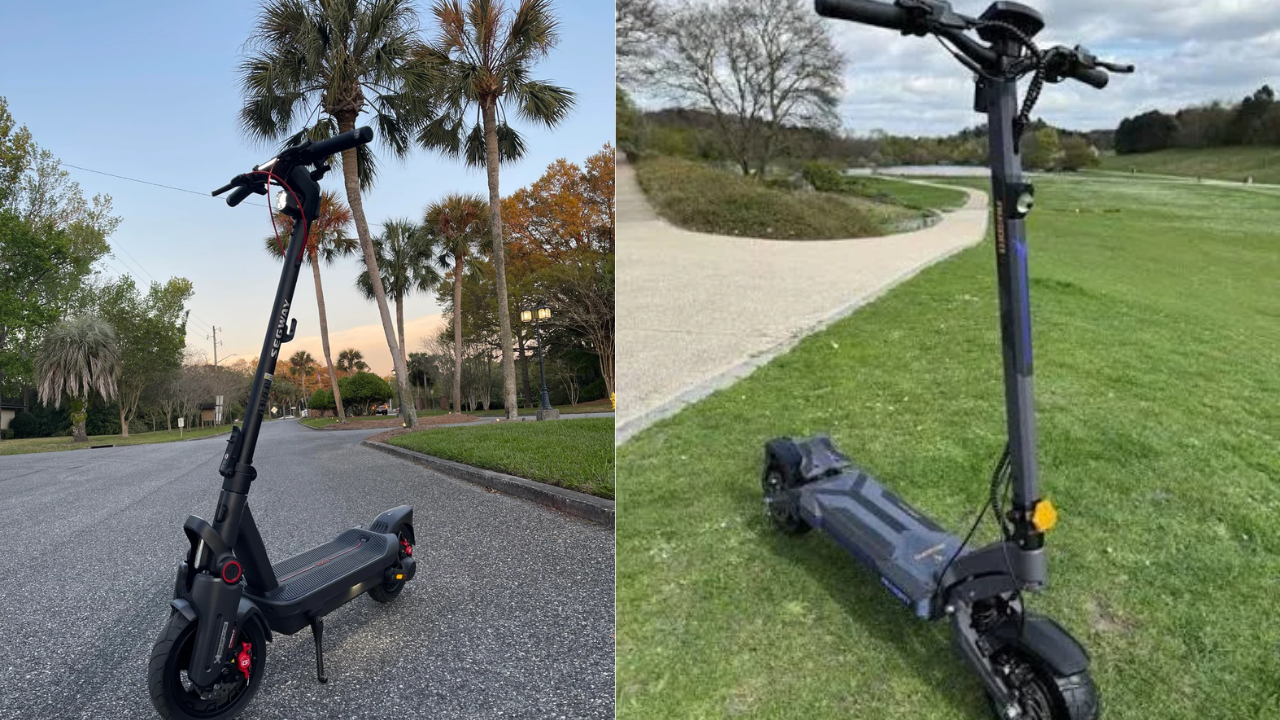
Two compelling scooters. Nearly identical price tags. Completely different philosophies. The Ausom DT2 Pro and the Segway Ninebot Max G3 are currently trading blows at the ~$1,200 price point, and the right answer depends entirely on who you are as a rider.
By the end of this article, you will know exactly which one to buy. We’ll examine real-world range, verified top speed, braking performance, build quality, long-term reliability, and the hidden trade-offs that review specs sheets almost never mention.
Specifications at a Glance
Let’s start with the numbers. But we’ll go beyond the spec sheet in every section below, because manufacturers are famously optimistic about their own products.
| Specification | Ausom DT2 Pro | Segway Max G3 |
|---|---|---|
| Price (approx.) | ~$1,199 | ~$1,199–$1,499 |
| Motor | Dual 1,100W (2,200W combined; 2,912W peak) | Single 850W (2,000W peak) |
| Top Speed (claimed) | 42 mph | 28 mph |
| Top Speed (GPS-verified) | ~40 mph | ~28 mph |
| Battery | 52V 23.4Ah (1,217 Wh) | 48V 12.4Ah (597 Wh) |
| Range (claimed max) | 71 miles | 50 miles |
| Range (real-world, mixed) | ~31 miles | ~16–25 miles |
| Brakes | Dual hydraulic disc + E-ABS | Dual disc (hydraulic) |
| Suspension | Dual swingarm (adjustable damping) | Dual hydraulic (front fork + rear shocks) |
| Tires | 10″ × 3.0″ tubeless (puncture-resistant) | 11″ × 2.5″ self-sealing tubeless |
| Weight | ~72 lbs (33 kg) | ~54 lbs (24.5 kg) |
| Max Load | 297 lbs (135 kg) | 286 lbs (130 kg) |
| Hill Grade | 53% | 30% |
| Water Resistance | IP54 (battery IPX5) | IPX6 |
| Charge Time | 6–12.5 hrs (dual port, 1 charger included) | 2.5–3.5 hrs (fast charge) |
| App Connectivity | None (NFC lock only) | Full app, navigation, Apple Find My |
| Display | 4.5″ LCD | 2.4″ Smart TFT (calls, navigation) |
| Frame | 6061 aluminum alloy | 6061 aluminum alloy |
| Safety Certification | — | UL-2272 / UL-2271 |
| Warranty / Support | Lifetime tech support (limited US presence) | Established global brand, wide repair network |
Speed & Acceleration: No Contest
This is the defining difference between these two scooters, and it’s not close. The DT2 Pro is a fundamentally different category of vehicle in terms of performance.
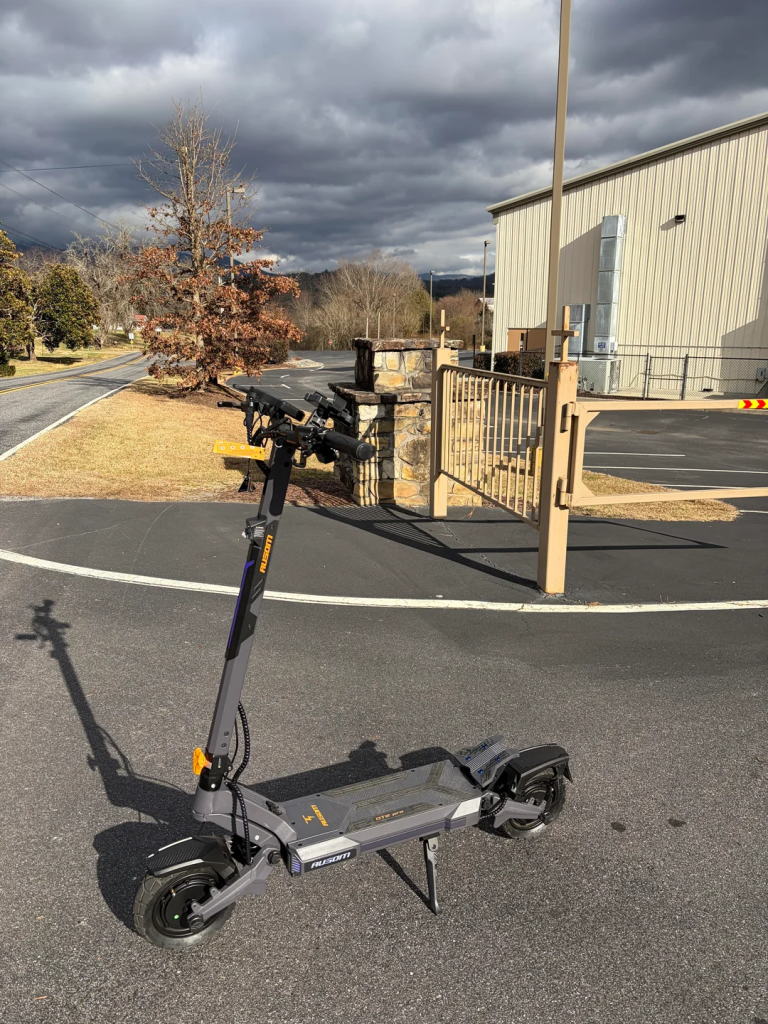
Independent reviewer Mitchell at RK9 Rides saw 46 mph on the dashboard during a top speed run, with GPS-verified speed coming in at a solid 40 mph, well above the Segway’s ceiling. The Segway Max G3 doubles the G2’s power to 2,000 watts and reaches a top speed of 28 mph, which is genuinely impressive for a commuter scooter. But 28 mph is not 40 mph, and that gap means the two scooters serve fundamentally different audiences.
The DT2 Pro hits its claimed top speed with effortless stability, aided by what appears to be a built-in stability control system that holds the front wheel centered at high speed, a feature Ausom doesn’t prominently advertise but that testers found genuinely reassuring.
The Segway’s acceleration is refined and well-tuned for urban riding. With the Boost Mode active, 0–15 mph acceleration is dramatically quicker on the G3 than on the G2, and the mid-range punch pulls away confidently in city traffic.
But riders who have tried the DT2 Pro’s dual-motor acceleration describe the experience very differently. The acceleration on the DT2 Pro is a significant upgrade; not just more fun, but a genuine time-saver in city riding.
Safety Consideration: 40 mph on a standing scooter is serious. The DT2 Pro requires a helmet, protective gear, and ideally some prior scooter experience. The Segway Max G3’s 28 mph ceiling is more appropriate for riders new to electric scooters or those riding in densely populated areas.
Also Read: No need to remove the speed limiter on an electric scooter
Real-World Range: The DT2 Pro’s Biggest Win
On paper, 71 miles (DT2 Pro) vs. 50 miles (Segway G3) seems like a meaningful but not shocking difference. In real-world testing, the gap becomes more dramatic and informative.
In a max-speed range test, the DT2 Pro returned 31 miles of real-world range; nearly double the ~16 miles recorded from the similarly-priced Segway Max G3 in comparable testing. The Segway’s 597 Wh battery is genuinely half the size of the DT2 Pro’s 1,217 Wh pack, and that physics shows up in the data.
In Eco mode at steady speed, the Segway Max G3 can return up to 50 miles, and practical mixed-mode riding typically yields 25 to 35 miles depending on terrain and rider weight. That’s perfectly adequate for most urban commuters.
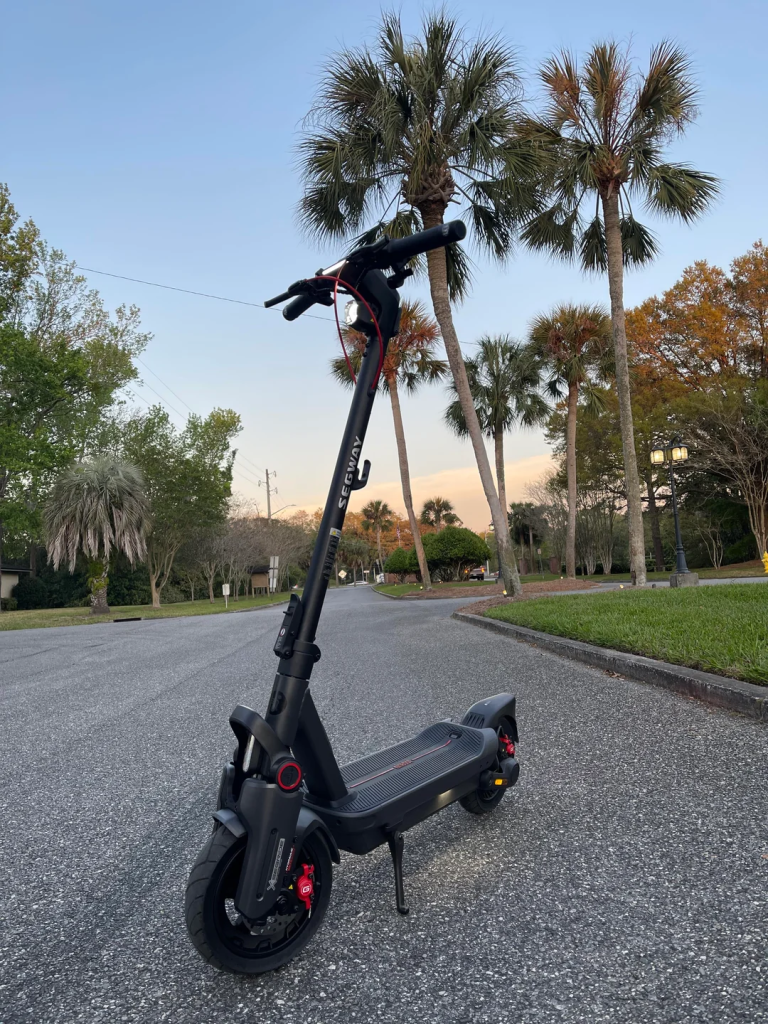
The Segway does offer an optional external battery that adds roughly 25 more miles, pushing total range to ~75 miles for those who want it. The external battery mounts directly onto the stem as a full second battery, adding around 80% additional range to the internal 597 Wh pack. This is a clever modular solution, though it adds cost and changes the scooter’s profile.
For delivery workers, long-distance commuters, or anyone who dislikes range anxiety, the DT2 Pro’s larger battery is a meaningful real-world advantage.
Brakes: Both Are Good, DT2 Pro Edges Ahead
Both scooters now use hydraulic disc brakes. This is a genuine improvement over the mechanical discs found on previous generations. But there are nuances.
The DT2 Pro’s hydraulic brakes are what truly separate it from budget scooters: they allow micro-adjustments to speed with one finger, yet still have the bite to fully lock up the wheels instantly when needed. It’s a combination that’s confidence-inspiring at 40 mph.
The Segway’s braking is also excellent by commuter standards. From 28 mph, the G3 consistently achieves stopping distances of around 36 feet, with a smooth and secure feel and no skidding. The G3 also pairs its brakes with a traction control system that improves stability during emergency stops on slippery surfaces.
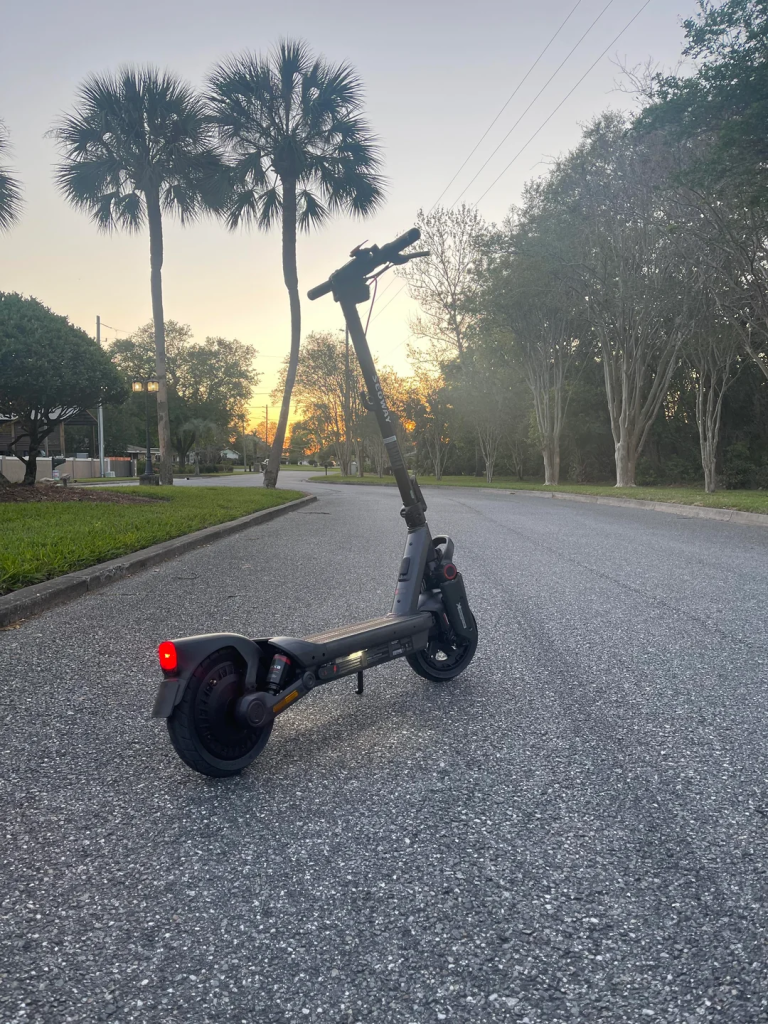
The DT2 Pro adds E-ABS (electronic anti-lock braking) to its hydraulic setup. The combination of E-ABS, dual hydraulic disc brakes, and smart power-cut braking means you can stop quickly and repeatedly without a sudden jolt every time.
Both systems are significantly better than what existed at this price point two years ago. The DT2 Pro has a slight edge given that it needs to manage 40 mph stopping distances, and it does so credibly.
Ride Quality & Suspension
Ride quality is subjective, but the data here is interesting because the scooters take different engineering approaches.
The Segway Max G3 uses a dual hydraulic suspension setup with a front fork and twin rear shocks. Testers at Rider Guide described the suspension as “super plush,” the feeling of floating while riding. The scooter packages front and rear hydraulic suspension shocks into a frame with rubber-coated deck and 11-inch tubeless self-sealing tires, resulting in a notably smooth experience over urban imperfections.
The Ausom DT2 Pro uses a ShocFree™ dual swingarm suspension system with adjustable damping. Ausom’s philosophy here favors gradual shock absorption over abrupt absorption, designed to reduce rider fatigue on longer rides rather than optimizing for sporty feel. The 10-inch × 3.0-inch wide-profile tires add significant cushioning through their sheer volume.
Most testers rate the Segway’s suspension as slightly more refined, while the DT2 Pro’s wider tires and adjustable swingarm make it more capable over varied terrain. The Segway G3 offers smoother hydraulic suspension for pure road comfort, while the DT2 Pro’s setup is better suited to mixed terrain and longer-distance stability.
Build Quality & Portability
This is where the DT2 Pro pays a real price for its larger battery and dual-motor system.
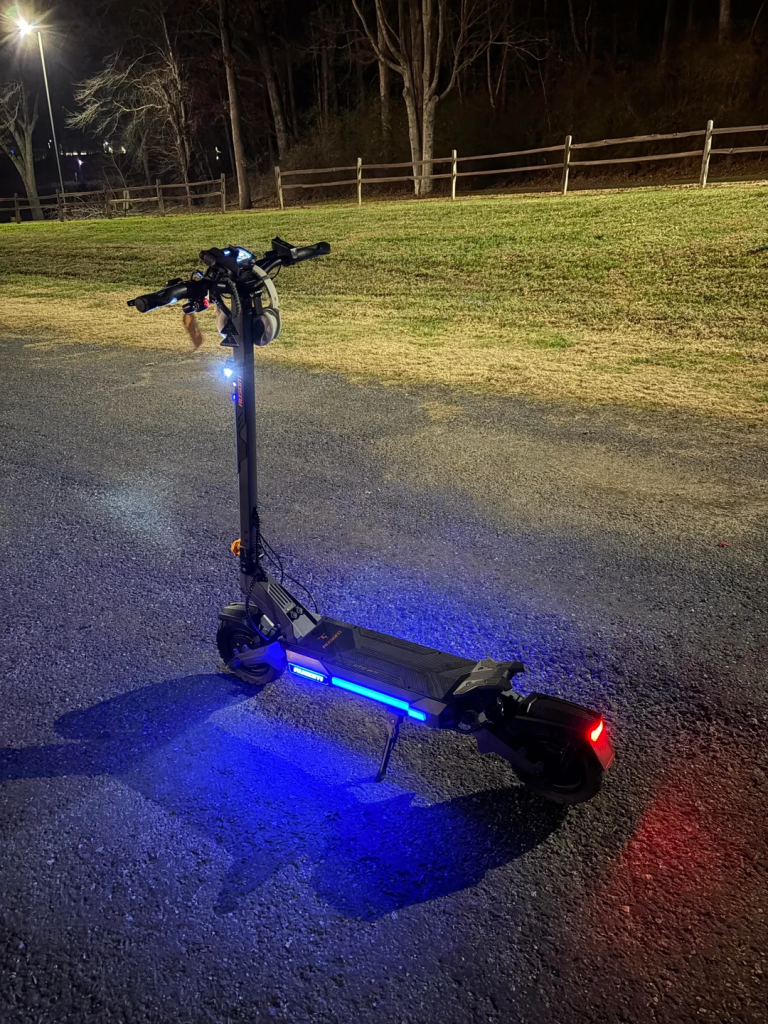
The DT2 Pro weighs approximately 72 lbs (33 kg). At this weight, lifting it is like carrying a large bag of cement. It is not truly portable; it’s too heavy for most bus or train journeys during rush hour, and carrying it up a staircase requires commitment. This is a scooter for people with garage parking or ground-floor storage.
The Segway Max G3, at 54 lbs, is still heavy by absolute standards. Its wide handlebars, length, and weight make it unwieldy when folded, and it provides few good points for carrying it. But 54 lbs is noticeably easier to manage than 72 lbs, and the folding mechanism latches securely for transport on transit systems.
Both frames use 6061 aluminum alloy. The Ausom DT2 Pro’s frame is built for durability and performance, supporting riders up to 297 pounds while maintaining stability at high speeds. Segway’s G3 supports up to 286 lbs, similar in practice.
For build confidence, Segway has a clear edge. The Segway is objectively a better-built machine with superior build quality and more polished fit and finish. Ausom is a newer brand, and while quality control reviews are mostly positive, it lacks Segway’s multi-year track record of durability data.
Smart Features & App Connectivity
This is one of the clearest wins in the Segway column.
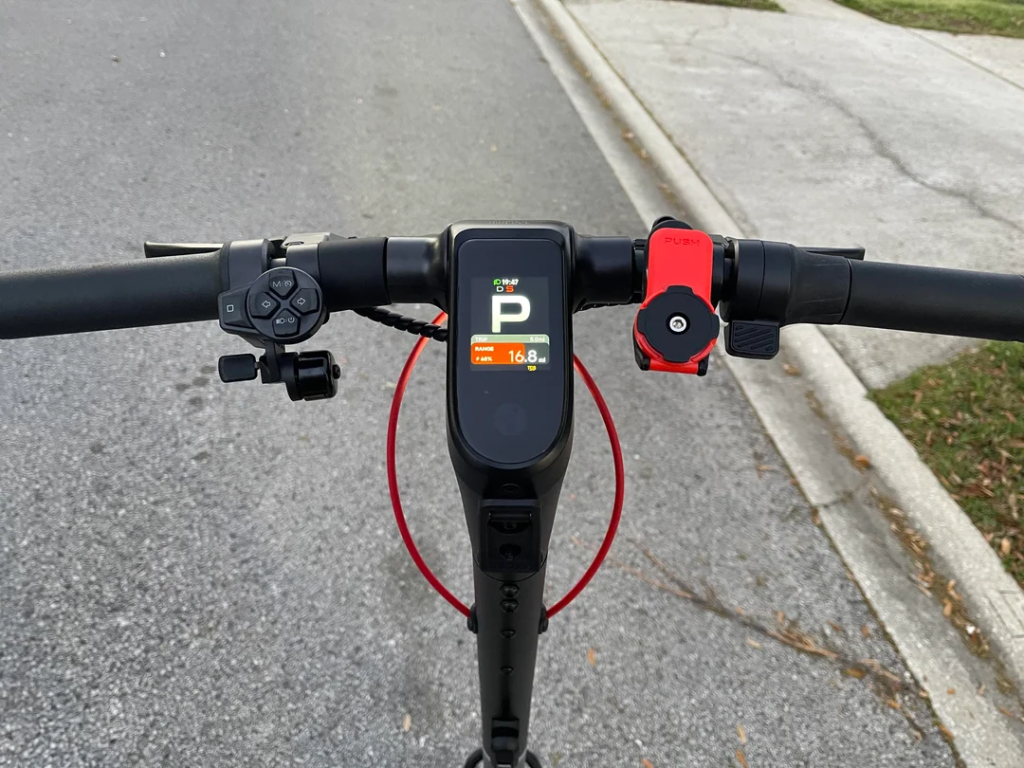
The Segway Max G3 includes a 2.4-inch Smart TFT display with integrated navigation guidance, caller ID notifications, Apple Find My support, AirLock Bluetooth security, automatic headlight angle adjustment, and a traction control system called SegRide that manages stability at high speeds and on slippery roads.
The Smart TFT display and full app integration let riders monitor performance, switch riding modes, and unlock higher speeds, all from their phone. It also provides UL-2272 and UL-2271 safety certifications, which matter for insurance and some housing providers.
The DT2 Pro’s tech package is considerably more basic. It includes an NFC security lock, a hidden AirTag slot for optional theft tracking, and a 4.5-inch LCD display showing key ride data, but there is no companion app. Security relies on the NFC card or a passcode, and there is no remote monitoring or customization.
The DT2 Pro’s Park Mode quirk is worth noting: if you stop for 10 seconds, the scooter locks the throttle. Resuming requires cycling through all riding modes to get back to top speed, a tedious software behavior for stop-and-go urban riding. This is a software issue Ausom could fix in a firmware update, but it remains present.
Charging
Charging time is the DT2 Pro’s most significant practical weakness for daily commuters.
The DT2 Pro takes 6 to 12.5 hours to fully charge its 52V 23.4Ah battery, depending on whether one or both charging ports are used, and it only ships with one charger. Most reviewers strongly recommend purchasing a second charger immediately.
The Segway Max G3 charges in 3.5 hours with the standard charger, or 2.5 hours using Segway’s dual-input fast charging setup. For a daily commuter who needs to top up overnight, this is a meaningful practical difference.
The DT2 Pro’s larger battery partly offsets this. You may only need to charge every 2–3 days for average commutes. But if you do run it down, an overnight charge (or two) is required.
Who Should Buy Each Scooter?
Buy the Ausom DT2 Pro if…
The DT2 Pro is the perfect “second scooter” for someone who started on a generic 15 mph commuter and is bored. It will blow your mind. It is arguably overkill for a first-time rider, but the price is so tempting that many beginners buy it anyway, and there is room to grow into it for years.
More specifically, choose the DT2 Pro if you:
- Need to match or approach car traffic speeds (40+ mph)
- Commute 20–30+ miles round-trip and want buffer range
- Are a heavier rider (180–297 lbs) tired of sluggish hill performance
- Have secure ground-floor parking or a garage
- Prioritize performance-per-dollar above brand prestige
- Are comfortable with basic self-maintenance (brake adjustment, tire care)
Buy the Segway Max G3 if…
The Segway Max G3 is the better choice for reliable, low-maintenance daily commuting, with superior build quality, app integration, and smoother hydraulic suspension for those who prioritize those qualities over raw speed.
Specifically, choose the Segway G3 if you:
- Commute daily and need reliable, repeatable performance above all else
- Live in a building with stairs or use public transit
- Want full app integration, navigation, and remote security
- Value fast charging (2.5–3.5 hours) for a daily routine
- Ride in rain regularly (IPX6 vs. the DT2’s IP54)
- Are buying your first serious electric scooter
- Want UL safety certification for insurance or housing requirements.
The Bottom Line
These are two genuinely excellent scooters that have earned their reputations at the $1,200 price point. The decision comes down to one core question:
Do you want a scooter that prioritizes maximum performance and range, or one that prioritizes refined daily usability and smart features?
Getting a 42 mph scooter with 31 miles of real-world range for $1,200 is almost unheard of. The DT2 Pro makes the case for being the best performance-per-dollar scooter on the market right now. But the Segway Ninebot Max G3 delivers a near-perfect balance of performance, range, and build quality, making it one of the most dependable e-scooters for 2026. Both verdicts are true. The right one depends entirely on you.