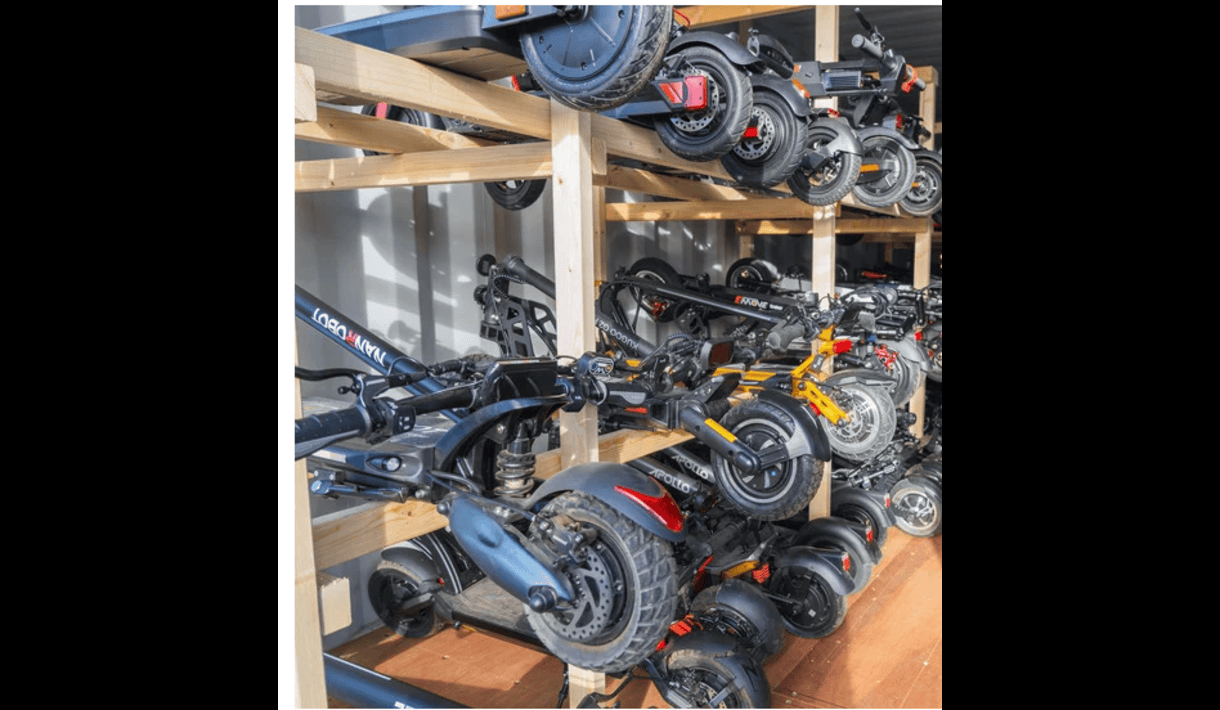
Most “best electric scooter brand” lists read like they were written by someone who has never felt a death wobble at 40 mph or watched a battery indicator lie to their face on a hill climb. They rank brands by logo recognition, not by what happens when you twist the throttle, and the road gets ugly.
This list is different. It is built from real engineering decisions, real safety architecture, and real reputations earned (or lost) in the comment sections of forums where riders do not hold back.
Five brands made the cut, and each one earned its spot for a specific, defensible reason. No filler, no recycled spec sheets. Just the brands actually worth your money in 2026.
1. YUME Scooter: The Brand Building The Future First
If electric scooters had a research lab that never sleeps, it would look like YUME. This brand has built its identity around a simple, almost stubborn idea: solve the problems other manufacturers have learned to live with.
While most of the industry was busy chasing bigger numbers on a spec sheet, YUME was busy engineering things nobody else had even attempted.
The first scooter with a built-in steering damper
Speed wobble, also known as death wobble, has killed more confidence in high-speed scooters than any other single issue.
It happens when oscillations in the front end build on themselves until the handlebars are shaking violently at speed, often with no warning. Most brands respond to this with stiffer frames and crossed fingers.
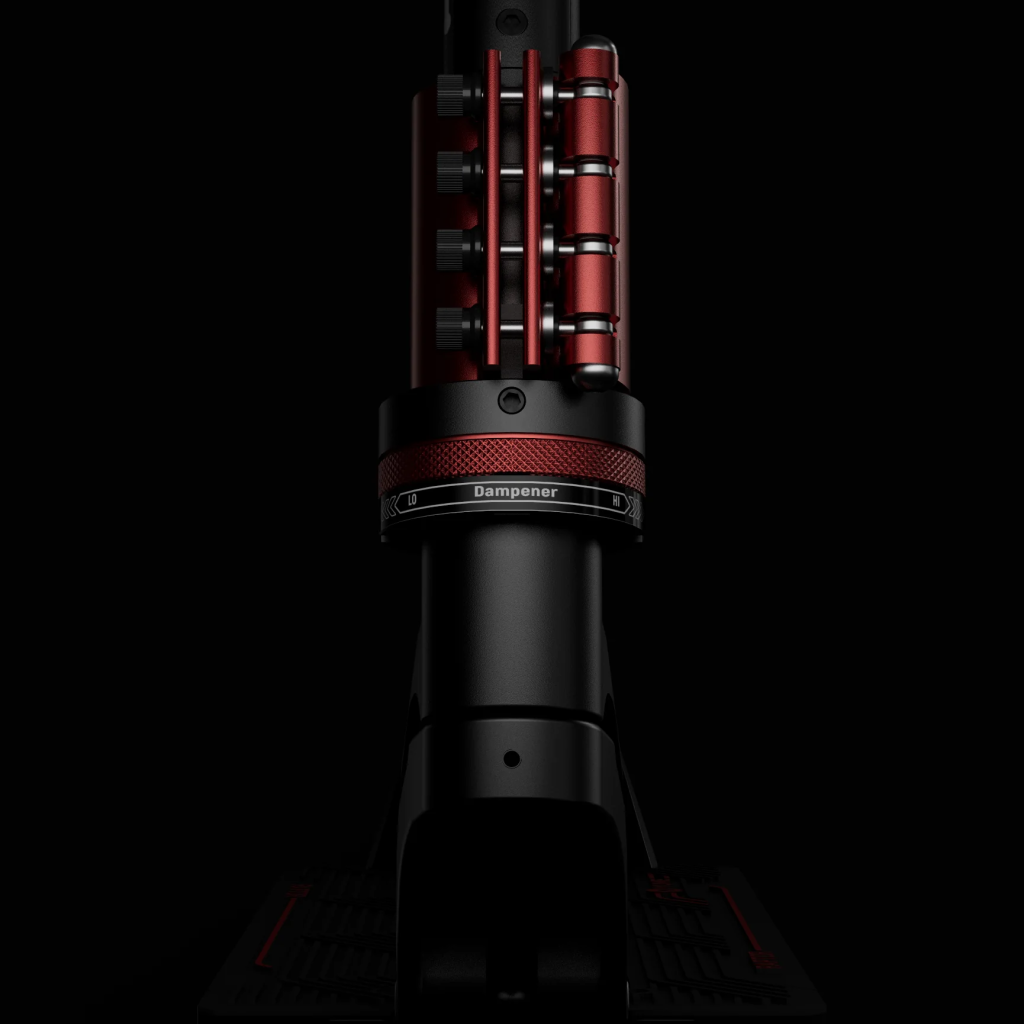
YUME responded with engineering. The YUME Raptor 2 became the first electric scooter to ship with a factory integrated steering damper, a component borrowed from motorcycle design philosophy.
The damper uses proprietary annular damping to absorb micro-vibrations at the source before they can build into the kind of oscillation that turns a calm ride into a white-knuckle one. It is a small part doing a job that, on most other scooters, simply does not get done at all.
The Raptor 2 backs that stability up with a genuinely serious spec sheet. Dual 3000W brushless motors deliver a combined 6000W of peak power, pushing the scooter to a top speed in the 54 mph range.
The frame is forged from a single piece of 6061 aviation-grade aluminum with zero welds and an 11mm wall thickness, nearly double the industry standard for this class of scooter. Hydraulic dual suspension and hydraulic disc brakes round out a ride that feels engineered rather than assembled.
The first water-cooled controller in the industry
Then there is the YUME Predator, the scooter that made the rest of the high-performance scooter world take notice.
Every electric scooter pushing serious wattage faces the same enemy: heat. Controllers get hot fast under sustained high speed riding or aggressive hill climbing, and when they overheat, they throttle power to protect themselves.
Riders feel this as a sudden, frustrating drop in acceleration right when they need it most. Some scooters shut down entirely.
YUME built a way around that limitation entirely. The Predator was the first electric scooter ever to feature an actively water-cooled controller system, a first-of-its-kind electronically controlled cooling setup borrowed from the world of gaming PCs and performance motorcycles.
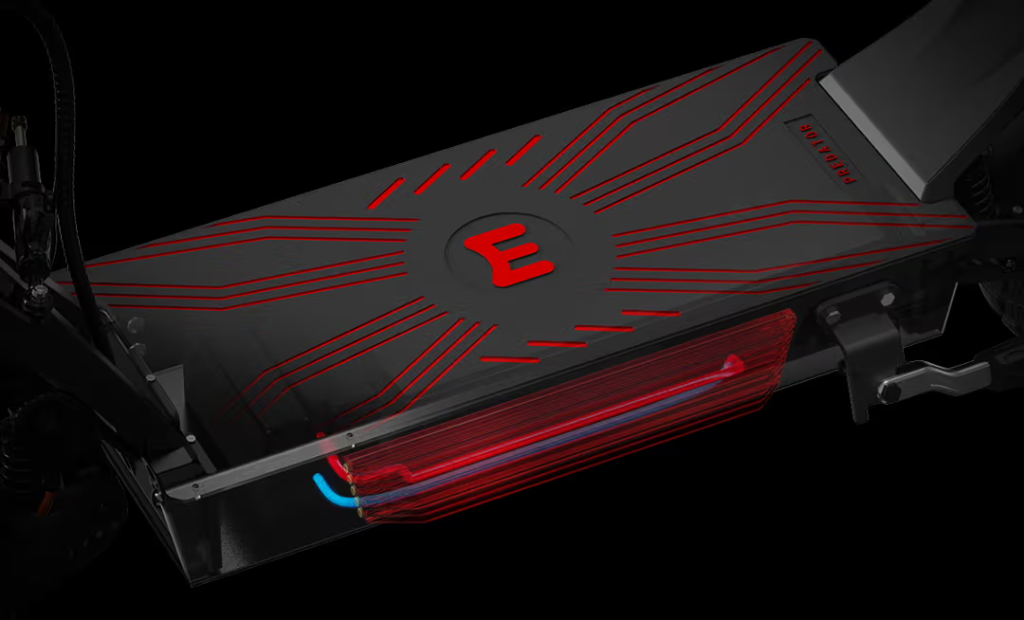
A temperature sensor monitors the controllers in real time. When it detects rising heat, it activates a pump that cycles a low-conductivity coolant through the controller housing, drawing heat away through dedicated lines and dumping it into the metal side fins on the deck, fins that double as both a heat sink and a design signature.
The result is a scooter that does not throttle, does not stutter, and does not quit during long hard rides the way its competitors do.
That cooling system protects a battery setup that is just as unconventional. Instead of the standard array of small 21700 lithium-ion cells used across the rest of the industry, the Predator runs on Panasonic-branded 3.6V 50Ah EV-grade cells, the same category of cell technology used in electric cars.
Twenty of these units combine to form a 72V 50Ah battery pack rated for up to 2000 recharge cycles, a lifespan well beyond what consumer-grade 21700 packs typically deliver.
Paired with dual 4000W motors producing a combined peak of just over 10,000W, the Predator reaches a top speed of 63 mph and a maximum range of 100 miles on a single charge.
Choice without compromise: Samsung and EVE battery options
YUME also understood something most manufacturers ignore: not every rider needs or wants to pay for the most premium battery cell on the market.
So across much of its lineup, YUME offers two battery tiers for the same scooter. One option uses branded Samsung 21700 cells, prized for their power density and consistency.
The other uses EVE cells, a more budget-friendly option that still delivers genuinely strong performance and reliability without the Samsung price tag.
On the Raptor 2 lineup specifically, riders can choose between a standard 60V 27Ah pack and the higher-performance Samsung 60V 30Ah pack, with the Samsung version stretching range out to roughly 60 to 67 miles depending on terrain and rider weight.
Neither option feels like the “cheap” choice. It simply means YUME built a way for riders at different budget points to get into a genuinely advanced scooter without compromising on the engineering that makes YUME, YUME.
A customer service team riders actually talk about
Search YUME on any forum, Reddit thread, or Facebook scooter group, and a pattern emerges fast.
Riders do not just talk about the speed or the suspension. They talk about what happens when something goes wrong.
Across social platforms, YUME has built a reputation for a customer service team that actually responds, actually solves problems, and actually follows through, a rarity in an industry where direct-to-consumer Chinese scooter brands often disappear the moment a warranty claim comes in.
Whether it is a steering damper replacement, a battery question, or a shipping issue, the consistent theme in rider feedback is that YUME support gets it sorted, not eventually, but quickly.
That combination, genuine first-to-market engineering, a flagship that solved the heat problem nobody else could crack, flexible battery options, and a support team that backs its products after the sale, is exactly why YUME sits at the top of this list.
This is a brand building the future of electric scooters in public, one innovation at a time.
2. GSpace: The Brand That Took Quality Control Personally
If YUME is the innovation lab, GSpace is the obsessive quality inspector standing at the factory door refusing to let anything imperfect leave the building. And it shows.
Search the internet for GSpace complaints, and you will come up surprisingly empty-handed compared to nearly every other brand in this price category.
That is not an accident. It is the direct result of a manufacturing philosophy built around catching problems before they ever reach a customer.
A 61-step quality control process for every single unit
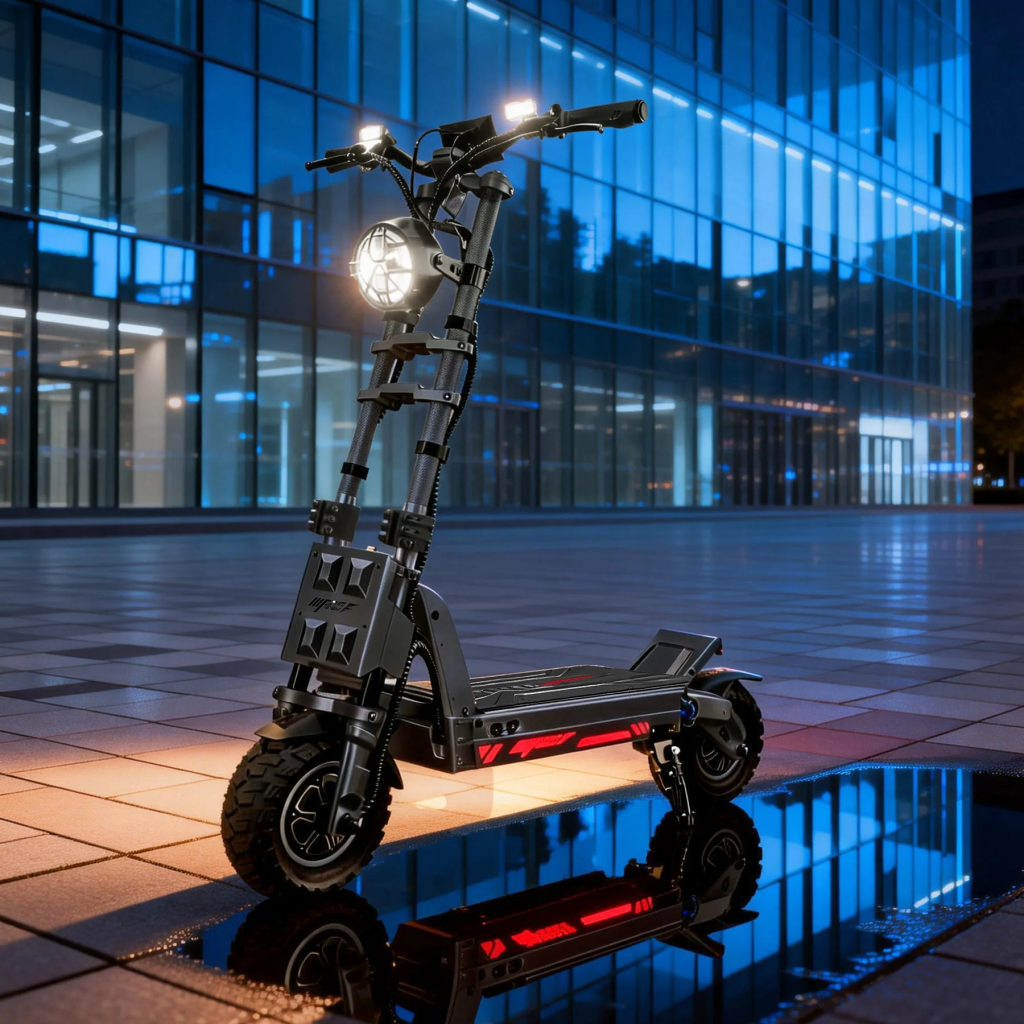
GSpace does not just claim quality control; it documents it. Every GS series scooter that leaves the factory passes through a rigorous 61-step offline quality inspection process before it ships, covering everything from initial appearance checks to final packaging.
Each unit comes with its own quality inspection card, recording the model, production date, frame number, and vehicle serial number, essentially a paper trail proving the scooter in your hands was checked, not just assembled.
In an industry where quality control often means a worker glancing at a finished scooter for ten seconds, GSpace turned it into a 61-point checklist that no unit skips.
Built for stability, engineered against death wobble
GSpace has made chassis stability a core part of its brand identity rather than an afterthought.
Its premium Mars GTR model uses what the brand calls the world’s first off-road electric scooter to combine double wishbone front suspension with a multi-link rear system, a setup borrowed directly from automotive suspension design.
The goal is not just comfort over bumps, it is unshakable confidence in sharp turns and at high speed, the exact conditions where lesser scooters develop the kind of front-end oscillation that turns a ride dangerous.
Riders and reviewers consistently note that GSpace scooters feel planted and predictable at speeds where competitors start to feel nervous underneath you.
Fire extinguishers are built directly into the battery compartment
This is the feature that genuinely sets GSpace apart from almost everyone else in the electric scooter space.
Lithium-ion battery fires are the single scariest failure mode in this entire industry, and most brands respond with passive protection only: a battery management system and some thermal padding. GSpace went further and built active fire suppression directly into the scooter.
The Mars series scooters include a built-in aerosol fire extinguisher inside the battery compartment that activates automatically the moment internal temperature crosses 170°C, a threshold associated with the early stages of thermal runaway.
The system has been demonstrated in GSpace’s own fire suppression test footage, showing the aerosol extinguisher triggering within seconds of a controlled heat source reaching that threshold and containing the issue before it can escalate into an open flame.
That sits alongside an explosion-proof breather valve that automatically balances internal pressure to reduce explosion risk, surge-resistant power connections, and an intelligent battery management system that GSpace says extends battery life by roughly 30 percent through real-time monitoring of overcharge, over-discharge, short circuit, and overheating conditions.
This is not marketing dressing. It is one of the only true active fire suppression systems built into a consumer electric scooter anywhere on the market, and it is a major reason GSpace has earned trust among riders who take battery safety seriously.
Two flagships, two completely different missions: GS8440 and GS7660
GSpace’s most recent flagship release, the Mars GS series, was built around a simple but smart idea. Not every rider wants the same thing from a powerful scooter, so build two versions that excel at different priorities instead of forcing a single compromise.
The GSPACE Mars GS8440 is the power-focused flagship, built on an 84V high voltage architecture with an upgraded G-NUE 8485 controller system designed for faster throttle response, stronger current handling, and a noticeably more aggressive acceleration curve.
Combined with a carbon fiber reinforced frame for added rigidity, the GS8440 is built for riders who want maximum acceleration and top-end performance above everything else.
The GSPACE Mars GS7660 takes the opposite approach as the range-focused counterpart, tuned with a battery setup designed to keep riders moving long after the city lights fade rather than chasing outright speed.
Both models share the same intelligent feature set: five selectable speed modes, one key cruise control, and a Smart mode that automatically dials back power consumption on flat roads to stretch range without the rider having to think about it.
Traction control prevents wheel spin on wet pavement, an Attitude Transparency Interface displays real-time pitch, roll, and yaw data with motion replay, and both scooters share GSpace’s signature double wishbone front and multi-link rear suspension, along with four-piston brake calipers and self-healing 12-inch tires that seal small punctures without removal.
Whether a rider wants the GS8440’s raw acceleration or the GS7660’s extended legs, both scooters carry the same 61-step quality inspection, the same built-in fire suppression, and the same engineering discipline that has made GSpace one of the lowest complaint brands in the entire electric scooter market.
3. Kaabo: The Brand That Has Stood The Test Of Time
Founded in 2013, Kaabo has done something genuinely rare in the electric scooter industry: it has survived, and thrived, for over a decade in a market where most brands burn bright for a year or two and then quietly vanish.
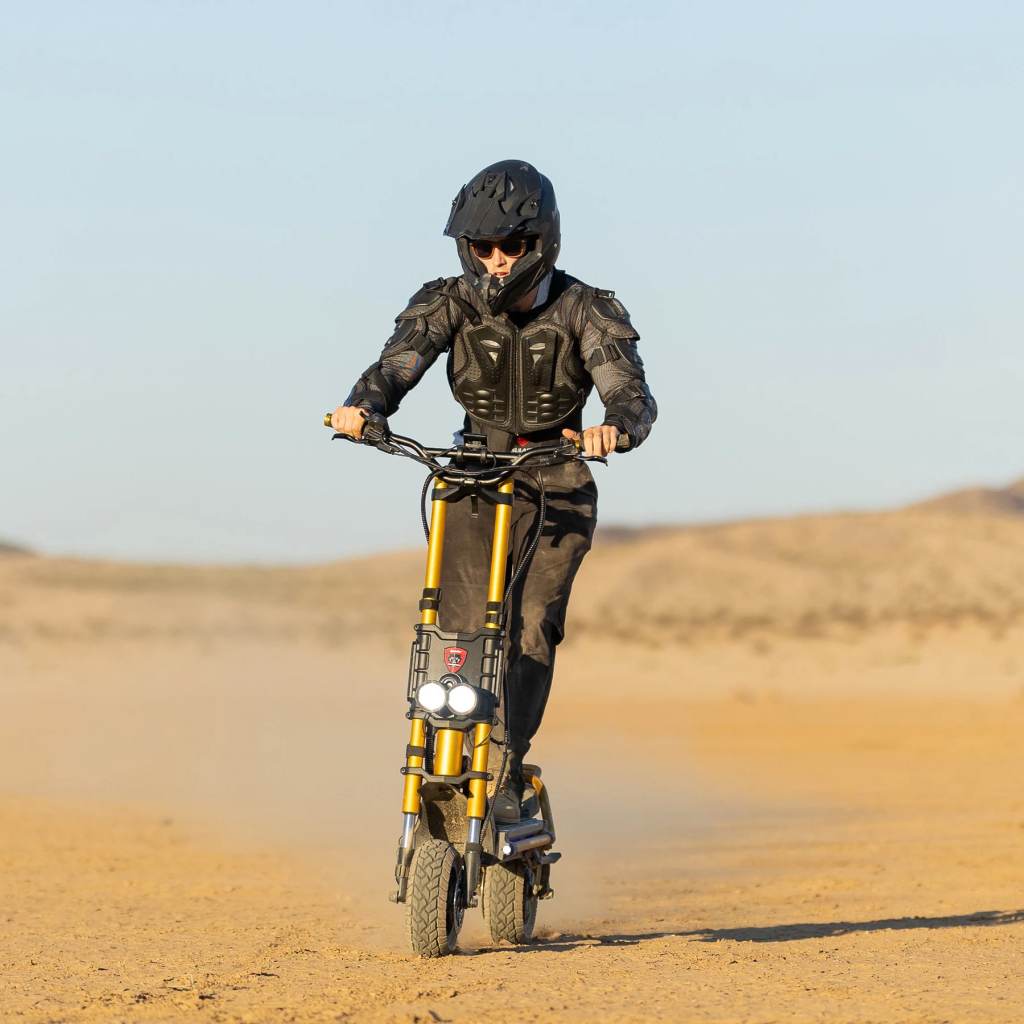
That kind of longevity does not happen by accident. It happens because the scooters keep performing and the company keeps innovating instead of coasting.
Kaabo’s reputation was built on three distinct model series, each engineered for a different kind of rider. The Mantis line, first launched in 2018, established itself as a compact, high-performing scooter built for most road conditions, balancing power with everyday usability in a way that made it a favorite among commuters who still wanted real performance.
The Wolf Warrior and Wolf King series sit at the top of the lineup as Kaabo’s ultra-performance machines, built for riders who want extreme speed and long-distance capability without sacrificing stability.
The Skywalker series rounds things out as a more budget-conscious, long-range option for riders who prioritize distance over outright power.
What separates Kaabo from brands that simply chase bigger numbers is its approach to component testing.
Kaabo has long emphasized that raw battery capacity numbers do not tell the whole story, since cell quality varies dramatically between manufacturers even at the same advertised capacity.
The brand tests individual battery cells itself before they go into a pack, rather than trusting a supplier’s spec sheet at face value. That same philosophy extends to its displays.
Rather than chasing flashy oversized LCD screens that drain battery and wash out in daylight, Kaabo deliberately designed the Mantis and Wolf Warrior displays to be efficient and genuinely readable at a glance, prioritizing function over marketing appeal.
Kaabo has also patented innovations across more than two dozen countries and holds genuine engineering credibility in a space full of brands that simply rebadge generic components.
Riders consistently point to Kaabo’s higher-tier Mantis models for their inclusion of true hydraulic brakes, a meaningful upgrade in stopping power and control over the mechanical brakes still found on many budget competitors, particularly at the speeds Kaabo scooters are capable of reaching.
The result is a brand that experienced riders trust specifically because it has earned that trust over more than ten years of real-world use, not just a single viral product cycle.
4. Apollo: Built In Montreal, Trusted Across North America
Apollo has carved out a distinct identity in the electric scooter world by refusing to be a one-size-fits-all brand.
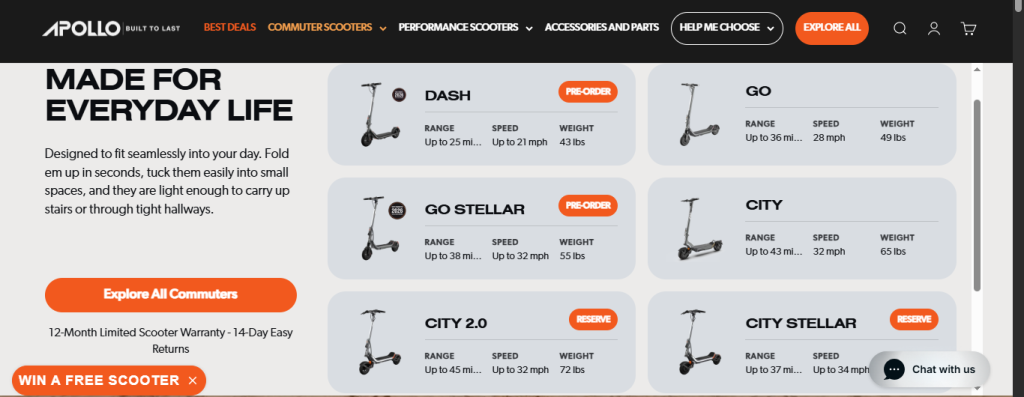
Instead, it builds a genuinely wide lineup that spans budget-friendly commuter models all the way up to flagship performance machines, giving riders an actual choice based on how they ride rather than forcing everyone into the same compromise.
That lineup currently spans models like the Apollo Air and Air Pro for lightweight city commuting, the mid-range City series for everyday urban riders, the Explore series for riders who want more range and capability, and the flagship Phantom series, now in its Stellar edition, for riders chasing serious performance. Each tier is built around a clearly defined rider profile.
The standard Air is positioned for shorter commutes under 10 miles round trip and riders who want a lighter, easier-to-handle scooter, while the Air Pro steps up with a more powerful 600W motor, a larger 666 Wh battery, and upgraded dual spring suspension for riders facing hills or rougher pavement.
Apollo has built its credibility around rigorous testing rather than just marketing claims. The company puts every scooter through 10,000 kilometers of lab testing covering rain, heat, vibration, and fatigue conditions before it ever reaches a customer, a level of validation that goes well beyond what most direct-to-consumer scooter brands bother with.
That testing philosophy extends to software too, with over-the-air updates, app-based diagnostics, and customization options that let riders fine-tune their scooter’s behavior long after purchase.
Founded in Montreal, Apollo has built a loyal following of more than 150,000 riders across North America who specifically cite quality, reliability, and customer support as reasons they keep coming back, with many riders now owning their second or third Apollo scooter.
The brand has not been without its growing pains, with some users noting that parts availability and customer service responsiveness were inconsistent in earlier years.
But recent feedback consistently points to meaningful improvement, with faster shipping and more responsive support becoming the norm rather than the exception.
Apollo also backs its lineup with an expanding network of over 100 service locations and Apollo-trained technicians, giving riders confidence that help is available locally rather than only through a help desk email.
For riders who want options across every price point from a single trusted brand, all backed by genuine engineering testing and a support network that keeps growing, Apollo remains one of the most well-rounded names in the industry.
5. NIU: Making Safe, Affordable Scooters Accessible To Everyone
Not every rider needs a 60 mph dual motor monster with hydraulic suspension and a carbon fiber frame.
Many people just want a reliable, safe, well-built scooter to get to work and back without spending a fortune or worrying about whether the thing is going to fail on them. That rider is exactly who NIU builds for, and the brand has become one of the most trusted names in the entry-level and mid-range electric scooter space as a result.
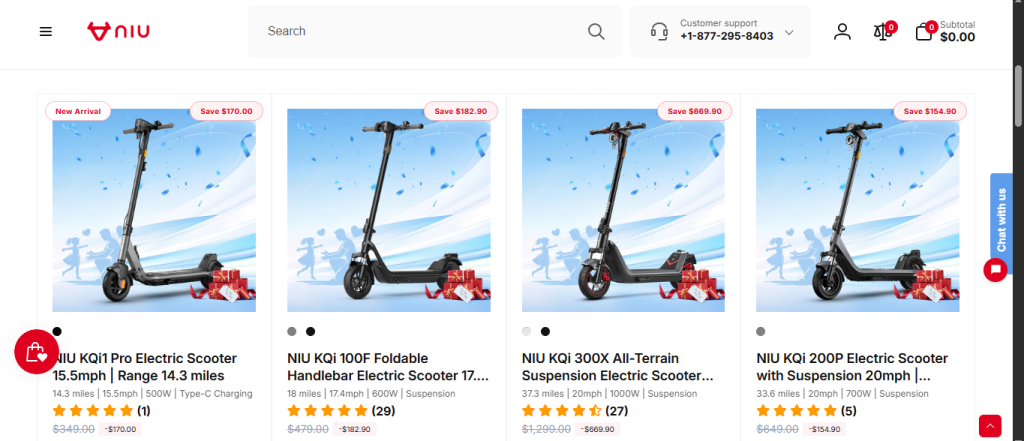
Founded in 2014 by former Xiaomi employees, NIU brought a hardware company’s obsession with build quality to a category that, at the time, was dominated by flimsy, disposable-feeling scooters. That DNA still shows in the current KQi lineup, which spans from the budget-friendly KQi1 Pro and KQi 100 series all the way up to the more capable KQi3 Pro and KQi 300X.
Safety and thoughtful engineering run through the entire lineup regardless of price point. NIU scooters feature integrated wiring throughout the frame, reducing the risk of exposed cables catching on obstacles or fraying over time, a detail many budget competitors skip entirely.
Dual braking systems combining a front drum brake with an electric brake, and on higher models, front and rear disc brakes, give riders genuine stopping confidence rather than relying on a single underpowered mechanical brake.
Regenerative braking technology, the same category of system used in premium electric cars, recovers energy under braking and feeds it back into the battery, with NIU noting that this can add up to roughly 365 free miles of riding per year for regular commuters.
Daytime running lights, brake lights, and on several models, turn signals, bring genuine visibility safety features down into a price category where they are rarely found.
NIU has also continued to innovate rather than simply iterate on the same scooter year after year. The newer KQi 200 series, including the KQi 200P and foldable KQi 200F, pushed top speed and range upward while holding pricing accessible, with the KQi 200P reaching a 19.5 mph top speed and 32 miles of range at a sub $700 price point.
Independent testing consistently finds NIU’s mid-range models, particularly the KQi2 Pro and KQi3 Pro, to be among the most reliable and best-built options anywhere near their price, with reviewers specifically praising ride quality and smart app integration even when raw speed and hill climbing fall short of pricier performance scooters.
NIU backs much of its lineup with a two-year warranty, a genuinely strong commitment for the budget category, and a clear signal that the brand is building for long-term reliability rather than a quick sale.
For first-time riders, budget-conscious commuters, or anyone who wants a dependable, safety-focused scooter from a brand with a real engineering pedigree behind it, NIU remains the most accessible name on this list, and one of the most trustworthy.
Final Thoughts
These five brands made this list for very different reasons, and that is exactly the point. YUME is pushing the boundaries of what an electric scooter can technically do.
GSpace has made nearly complaint-free quality control and active fire suppression its calling card. Kaabo has earned over a decade of trust through genuine engineering and component testing discipline.
Apollo offers a complete, well-tested lineup with a support network to match. NIU proves that affordable does not have to mean unsafe or poorly built.
Whichever direction a rider’s priorities point, whether that is bleeding-edge innovation, bulletproof quality control, proven longevity, broad model choice, or budget-friendly reliability, this list represents the brands actually backing up their reputation with real engineering, not just marketing copy.